

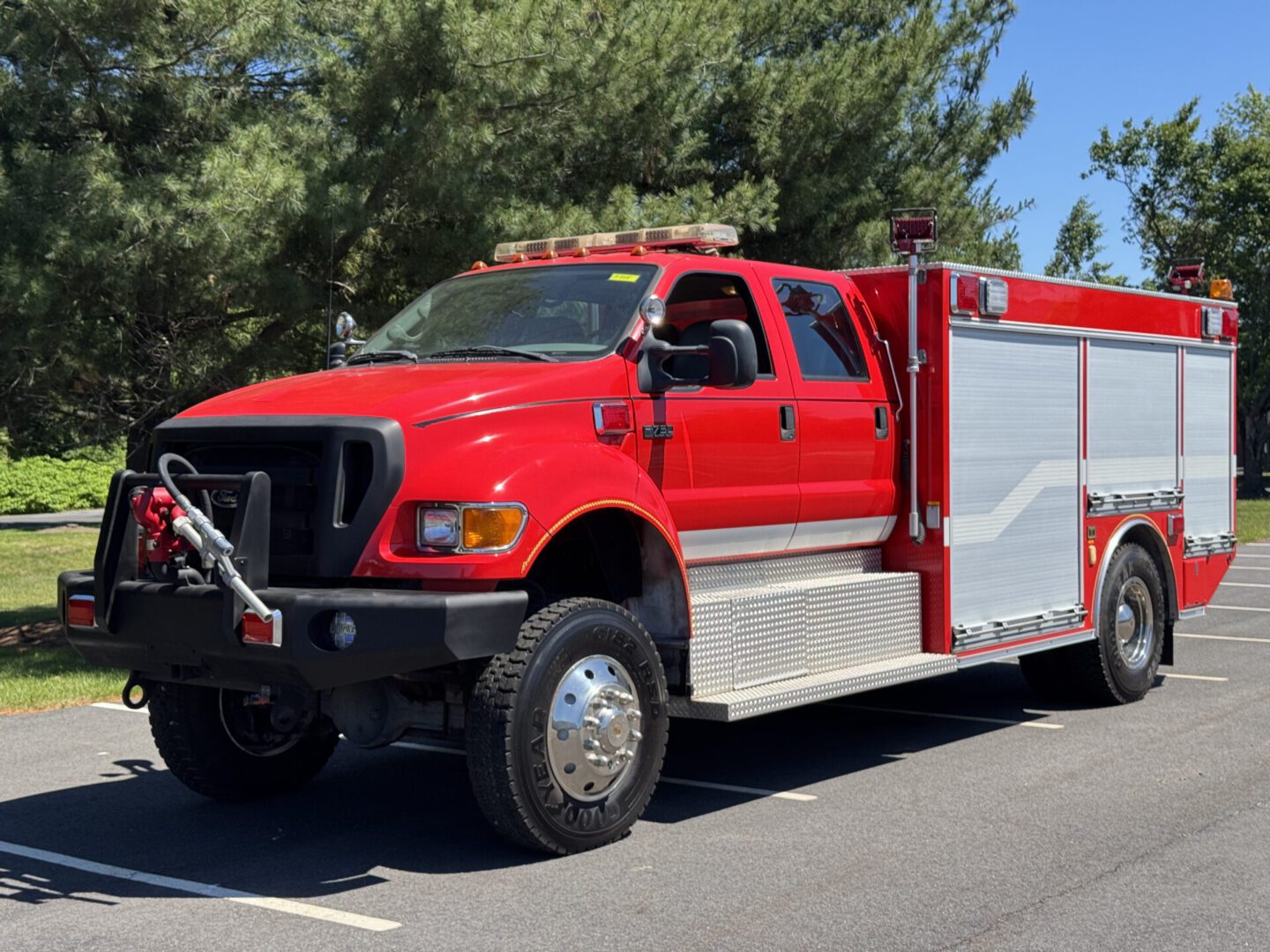
An ARFF truck (aircraft rescue and firefighting truck) is a purpose-built airport fire truck that carries dry chemical agent, water, and foam so crews can knock down a jet fuel fire in the first minutes of an aircraft emergency. A new one runs well over $1 million — the Amarillo (TX) Fire Department put a $1.3 million ARFF truck in service the first week of September 2026, and paid only $142,000 of a $2.8 million four-vehicle package out of city funds after an FAA grant. For most departments the realistic path to foam and dry chem capability is a used or reconditioned rig, not a new Oshkosh Striker.
We have been selling used fire apparatus since 2015 and have delivered hundreds of trucks across 49 states. Airport rigs are the category people ask about most and understand least, so here is the plain version — what an ARFF truck is, what the FAA requires, what these things cost, and what a department on a normal budget can realistically buy.
Key Takeaways
- A new municipal ARFF truck runs well over $1 million. Amarillo’s 2026 airport fire truck cost $1.3 million, and an FAA grant covered all but $142,000 of a $2.8 million four-vehicle package.
- Your FAA Index decides the budget. It is set by the length of the aircraft serving your airport, and 14 CFR § 139.317 fixes the minimum vehicles and agent for each one.
- Full airport Strikers rarely reach the used market. The realistic route to foam and dry chemical capability is a used or reconditioned 4×4 dry chem and foam rig.
- On an airport rig, engine hours and system condition matter far more than the odometer. Have the foam system, dry chemical system, turret and pump tested by a third party, not taken on the seller’s word.
What is an ARFF truck?
ARFF stands for aircraft rescue and firefighting. An ARFF truck is built for one job: getting agent onto a burning aircraft fast enough that the people inside can get out. That mission drives every design choice on the rig.
The differences from a structural pumper are real. An ARFF truck carries a roof turret that can flow foam while the truck is still moving. It carries a dry chemical or clean agent system alongside the water tank.
It rides on a high-clearance 4×4, 6×6, or 8×8 chassis so it can cross grass, mud, and ditches to reach an aircraft off the end of a runway. And it accelerates hard, because the clock on an aircraft fire is measured in seconds.
Jason Love, public information officer for the Amarillo Fire Department, put the stakes plainly when the city’s new rig went in service: “If we’re not able to get water on the fire very quickly, we have the high potential for losing a lot of life in a very small time frame because these people have nowhere to go.”
What did Amarillo’s new ARFF truck cost in 2026?
Amarillo gives us a clean, current number. Station 10 at Rick Husband Amarillo International Airport received a third-generation ARFF truck in mid-August 2026, trained on it, and placed it in service the first week of September 2026. It replaced equipment that was nearly 20 years old.
The truck cost $1.3 million. It was bought alongside three other vehicles for a package total of $2.8 million. The Amarillo City Council accepted a Federal Aviation Administration grant to fund the purchase, and the city’s own share of the whole package came to $142,000 according to NewsChannel 10 (KFDA).
Spec-wise it is a typical modern airport rig: a 1,500-gallon water tank, foam, a chemical powder system, and updated electrical gear including a thermal and night vision camera.
How much does an ARFF truck cost in 2026?
Amarillo’s $1.3 million is a fair mid-range marker for a new municipal ARFF vehicle. Larger 6×6 and 8×8 airport rigs with bigger tanks and higher flow rates go up sharply from there. Demand is not cooling off either — in September 2026 Oshkosh Airport Products announced an order from the United States Air Force for 34 Striker 6×6 ARFF vehicles, per Fire Apparatus Magazine.
That is the same squeeze hitting every apparatus category. We wrote about the forces behind it in our breakdown of why new fire truck prices keep climbing, and the short version applies here too: few manufacturers, long queues, and specialty chassis that nobody builds on spec.
Set the three realistic routes side by side and the gap is hard to miss.
| Route | Typical cost | Lead time | Best fit |
|---|---|---|---|
| New purpose-built airport fire truck (Oshkosh Striker class) | $1.3 million and up | Multi-year queue | FAA-certificated fields that must satisfy an Index on paper |
| Used ARFF or dry chemical and foam rig | From around $95,000 | Weeks | Industrial sites, general aviation fields, departments wanting real agent capability |
| New custom-built foam-capable brush or light rescue | From $129,000 | As little as 60 days | Small fields and industrial sites needing a foam-capable rapid intervention vehicle |
What does the FAA require an airport fire truck to carry?
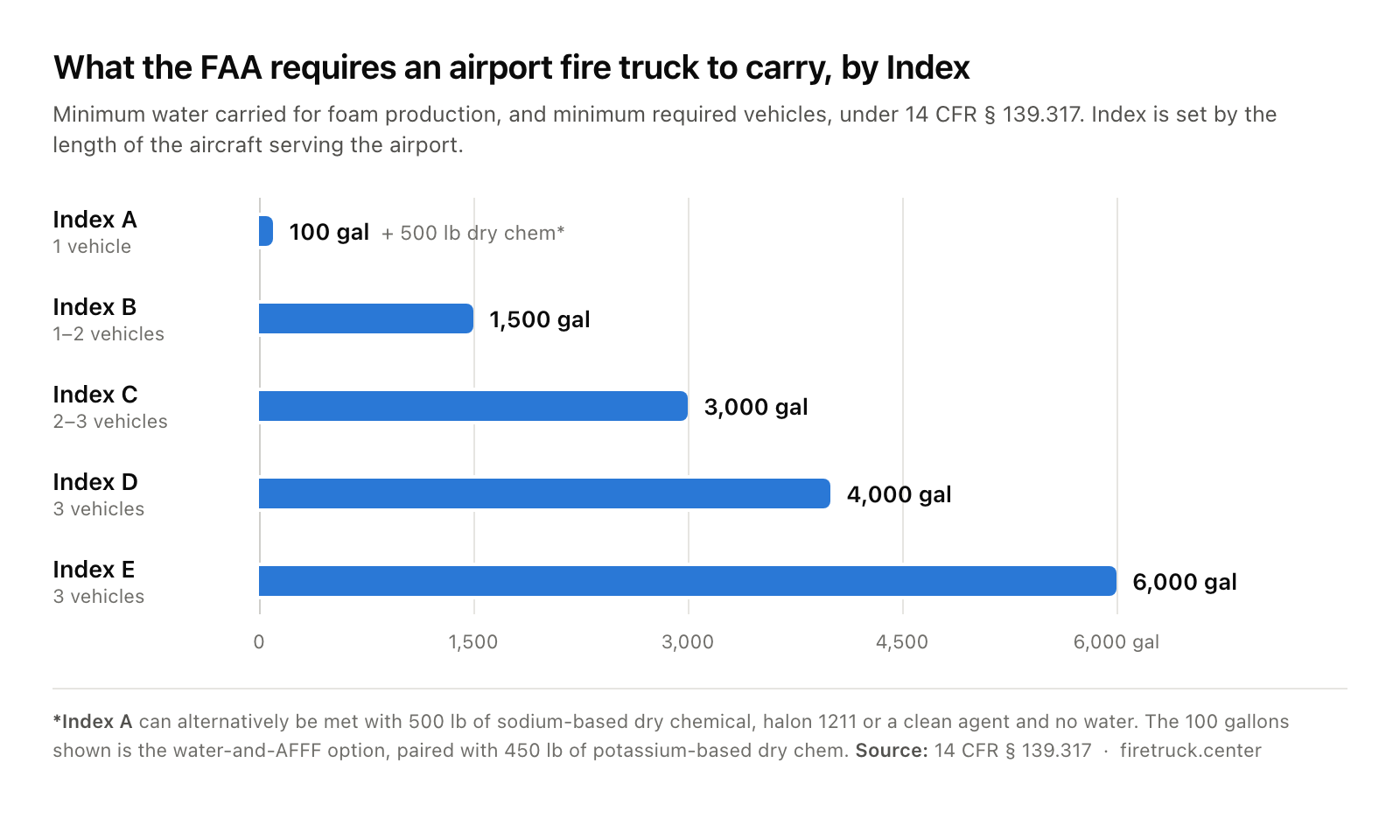
This is the part that decides the budget. FAA-certificated airports are assigned an Index based on the length of the aircraft serving them, and 14 CFR § 139.317 sets the minimum vehicles and agent for each Index.
| FAA Index | Minimum vehicles | Total water for foam production |
|---|---|---|
| Index A | 1 vehicle | 500 lb sodium-based dry chemical / halon 1211 / clean agent, or 450 lb potassium-based dry chem plus water and AFFF totaling 100 gallons |
| Index B | 1 or 2 vehicles | At least 1,500 gallons |
| Index C | 2 or 3 vehicles | At least 3,000 gallons |
| Index D | 3 vehicles | At least 4,000 gallons |
| Index E | 3 vehicles | At least 6,000 gallons |
Two details catch people out. Any vehicle used for Index B through E with a tank of at least 500 gallons has to carry a turret, and that turret has to flow at least 500 GPM. And every vehicle required to carry AFFF must carry enough concentrate to mix with twice the water on board.
Read the table again with a budget in mind. A small Index A field can meet the rule with one dry chemical vehicle. An Index C airport is buying two or three rigs. That jump is where the money goes.
Can you buy a used ARFF truck?
Yes, and the math often favors it. Airport rigs live an unusual life: they sit at the ready for years, roll on a handful of real calls, and get started and pump-tested constantly. So a 15-year-old ARFF truck can show remarkably low road miles while carrying serious engine and pump hours.
That is exactly the profile we buy for. Our general cutoff across all apparatus is around 100,000 miles and about 10,000 hours. On an airport rig the mileage number is almost never the problem. The hours, the foam system, and the turret are.
Be straight with yourself about what a used airport truck can do for you. If you hold an FAA certificate, the rig has to satisfy your Index on paper, and that is a conversation with your inspector before it is a conversation with a dealer. If you are an industrial site, a military installation, a general aviation field, or a municipal department that wants real foam and dry chem capability on hand, a used unit is a straightforward buy.
What should you inspect on a used ARFF or dry chem truck?
The structural checks are the same ones we run on every truck that comes through Levittown. The airport-specific ones are extra.
- Frame and structural integrity. No cracks, no hidden repairs, minimal corrosion.
- Engine, transmission, axles, brakes, suspension. Leaks, performance under load, service history.
- Pump test. Vacuum, leaks, and flow against the rated capacity, certified by a third party.
- Turret. Full range of travel, no binding, correct flow, and a nozzle that has not been fed corrosive foam and left wet.
- Foam proportioning system. The single most neglected system on a used airport rig. Test it, do not take a seller’s word for it.
- Dry chemical system. Vessel condition, nitrogen charge, hose and nozzle condition, agent not caked.
- Tank interior. Foam residue and corrosion, especially around the fill and the baffles.
- Electrical and lighting. Sirens, lighting package, and any thermal or camera systems the rig came with.
Our founder puts it the same way every time somebody asks what makes a used truck safe to buy:
“Inspecting a fire truck before it gets sold is the most critical part of our sales process.”
Every truck we sell goes through a 150-point inspection, with pump tests and aerial certifications performed by a third party to NFPA standards. And every truck carries our 30-day satisfaction guarantee — full refund inside 30 days if the department is not happy, with return freight on us. Almost nobody in this industry does that, and it is the reason we will not put a rig on the lot we have not gone through ourselves.
Does Fire Truck Center have ARFF trucks for sale?
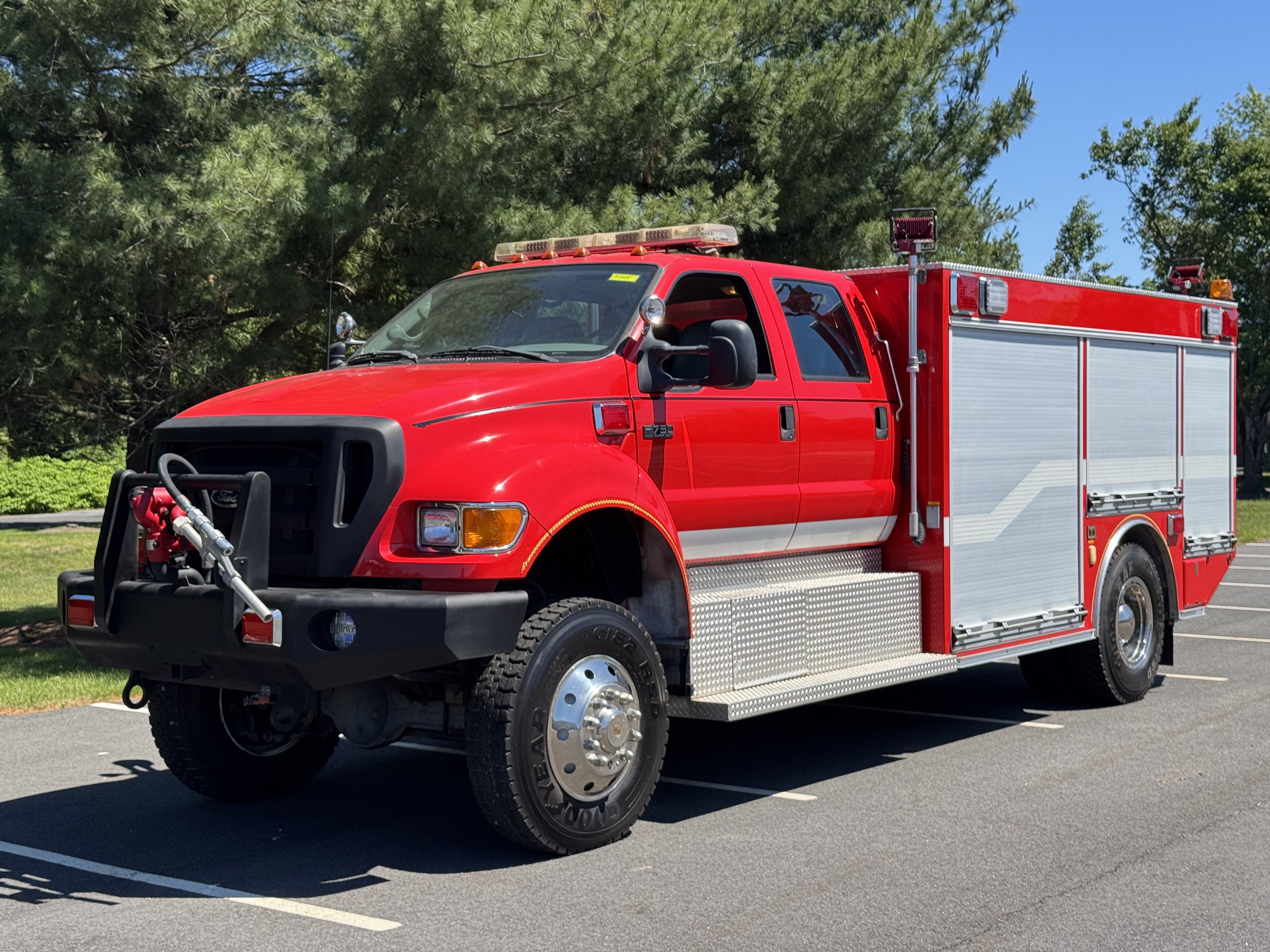
Honest answer: full Oshkosh Striker airport fire trucks are rare on the used market, and we do not always have one. What does move through our CAFS, dry chem, and ARFF category is the agent-capable end of that world. Right now that includes a 2006 Ford F-750 4×4 dry chemical and foam truck — the kind of rig that gives an industrial site or a small field real agent capability without a seven-figure invoice.
If what you need is foam and dry chem capability rather than a certificated airport rig, there are usually better-value paths. A used rescue or pumper with a foam system handles a lot of industrial and aircraft-adjacent risk for a fraction of an ARFF price. You can see current pricing by apparatus type in our 2026 used fire truck price guide, or browse everything we have in stock.
How long does it take to get an ARFF truck?
A new purpose-built airport vehicle follows the same multi-year queue as the rest of the industry. A reconditioned used truck ships in weeks — we have delivered trucks a few weeks after a department said yes.
There is a third option people forget. We build our own new brush trucks and light rescue vehicles on Ford, Chevy, and Ram chassis, with skid units, foam systems, compartments, and winches specified to the department. Those start around $129,000 and can be built in as little as 60 days, with a 5-year Ford chassis warranty and a 3-year warranty on the firefighting components.
For a small field or an industrial site that needs a foam-capable rapid intervention vehicle rather than a full Index-rated ARFF truck, that is frequently the better buy. Details are on our custom brush and light rescue build page.
How do departments pay for an ARFF truck?
Amarillo’s purchase is the model: an FAA grant carried nearly the whole $2.8 million package and the city covered $142,000. Airport improvement funding is the main route for certificated fields, and it is worth pursuing well before the rig you have hits 20 years old.
One requirement catches grant-funded buyers out. The FAA’s guide specification, AC 150/5220-10F, is advisory for most purchases — but it becomes mandatory for any ARFF vehicle bought with Airport Improvement Program or Passenger Facility Charge money. If a grant is paying, the vehicle has to meet that specification. Confirm it against the spec sheet before you sign, not after.
For everyone else, financing does the work. We work with lenders that specialize in emergency vehicles, and the application is straightforward — a department with clean financials and no legal issues generally has an easy time of it. We take trade-ins on trucks in good condition, and we deliver nationwide, either driven to you or shipped by carrier.
Frequently asked questions about ARFF trucks
What does ARFF stand for?
ARFF stands for aircraft rescue and firefighting. An ARFF truck is an airport fire apparatus built to attack aircraft fires with foam, water, and dry chemical agent.
How much does an ARFF truck cost?
A new municipal ARFF truck runs over $1 million. The Amarillo (TX) Fire Department’s 2026 ARFF truck cost $1.3 million, and larger 6×6 and 8×8 airport vehicles cost more. Used and reconditioned apparatus with foam and dry chemical capability costs a fraction of that.
What is the difference between an ARFF truck and a fire engine?
A fire engine is built to pump water at a structure from a hydrant or tank. An ARFF truck is built to reach an aircraft off-road, discharge foam from a roof turret while moving, and apply dry chemical agent to a fuel fire. ARFF trucks also ride on high-clearance all-wheel-drive chassis that a structural pumper does not use.
Is a used ARFF truck safe to buy?
It is, provided the foam system, dry chemical system, turret, and pump have all been tested by a third party rather than taken on the seller’s word. Airport rigs typically carry low road mileage and high engine hours, so hours and system condition matter far more than the odometer.
What FAA Index does my airport need?
Your Index is set by the length of the aircraft serving your airport, and the required vehicles and agent quantities for each Index are listed in 14 CFR § 139.317. Index A can be met with a single dry chemical vehicle; Index E requires three vehicles carrying at least 6,000 gallons of water for foam production.
Talk to us about airport and foam-capable apparatus
Fire Truck Center has been selling quality-tested used fire apparatus since 2015 from 1991 Hartel Ave, Levittown, PA 19057, with hundreds of trucks delivered across 49 states. Every truck gets a 150-point inspection and a 30-day satisfaction guarantee. Financing, extended warranties, and nationwide delivery are all available.
If you are working through an ARFF replacement, an Index question, or just want foam and dry chem capability on a realistic budget, call us at (215) 559-9119 or email help@firetruck.center. Tell us the mission and the number, and we will tell you honestly whether we have something that fits — or whether you are better off building new.
Sources
- FAA — AC 150/5220-10F, Guide Specification for Aircraft Rescue and Fire Fighting (ARFF) Vehicles
- Oshkosh Airport Products — Striker ARFF vehicle configurations (4×4, 6×6, 8×8 and Volterra electric)
- NFPA 1900 — the consolidated apparatus standard that now contains NFPA 414 for ARFF vehicles
- NewsChannel 10 — Amarillo Fire Department adds new specialized aircraft rescue truck to fleet (21 September 2026)
- Firehouse — Oshkosh Airport Products receives order from the United States Air Force for 34 ARFFs (21 September 2026)
- Cornell Legal Information Institute — 14 CFR § 139.317, Aircraft rescue and firefighting: Equipment and agents

 CALL US NOW