

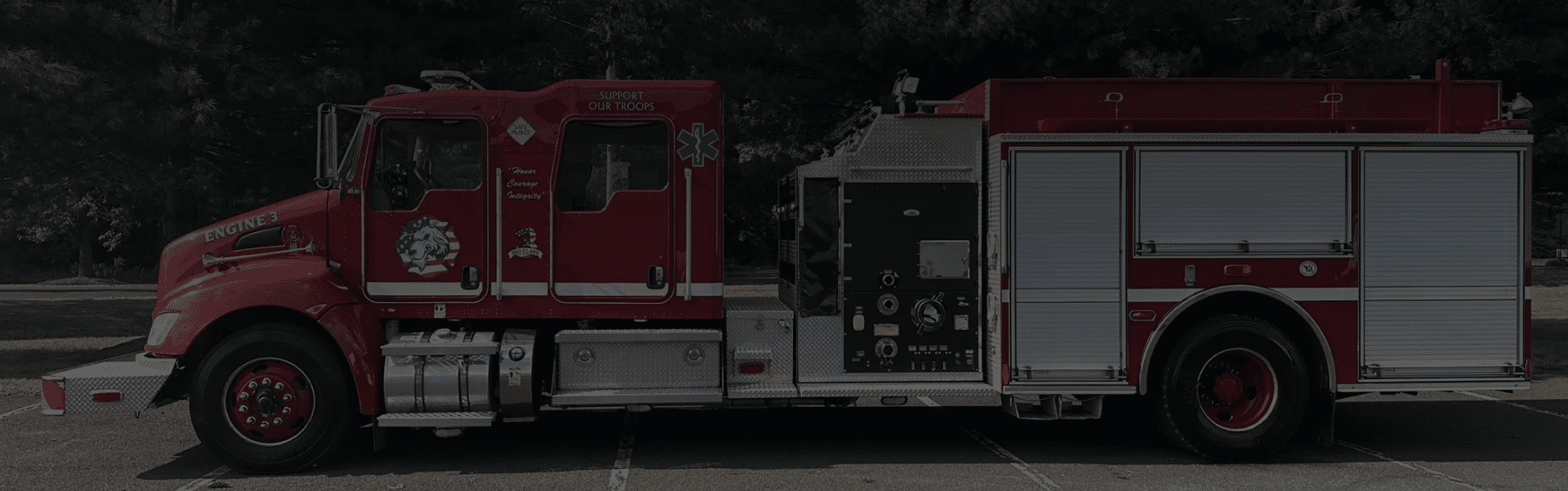
Find the Right Truck for Your Department
Explore inspected fire apparatus, compare categories and narrow the inventory with the filters.
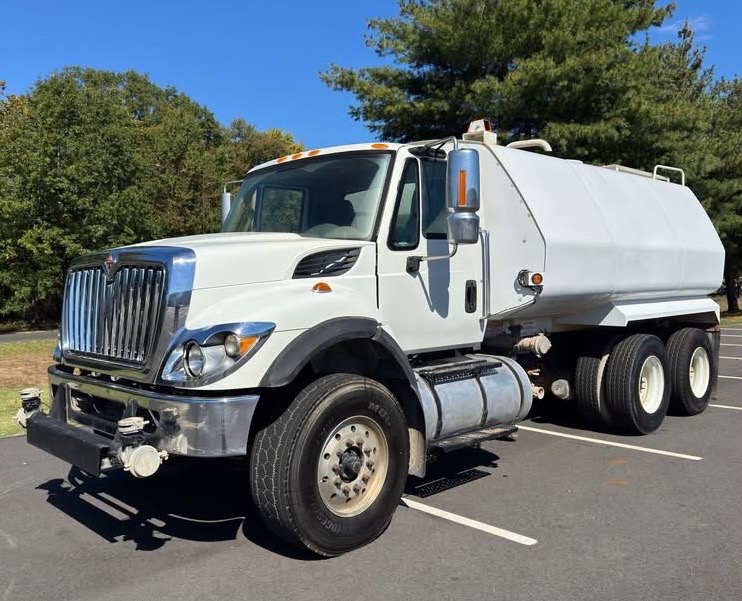 Available
2016 International 7400 SBA 6×4 Tanker
View Truck DetailsSold Trucks
See examples of apparatus we have handled and contact us to find a similar truck.
 Sold
Sold
2017 Rosenbauer Commander – SOLD
View Similar Trucks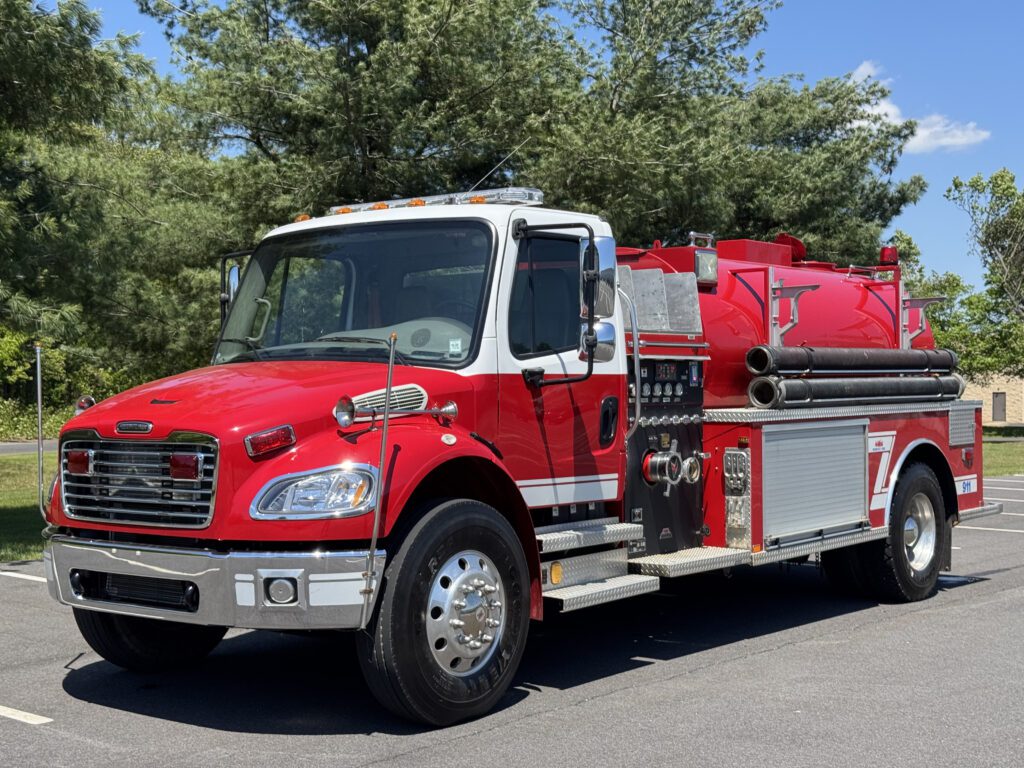 Sold
Sold
2006 Freightliner Tanker – SOLD
View Similar TrucksFire Truck Center sells used tankers and water tenders — commonly 1,000 to 3,000-plus gallons — that pass a 150-point inspection before they’re listed, most backed by a 30-day money-back guarantee. Good tankers are scarce, so they move fast when one comes in. We finance, take trade-ins, and deliver nationwide from our facility in Levittown, Pennsylvania.
What is a fire tanker (tender)
A fire tanker, called a tender in many regions, hauls large volumes of water to supply engines where hydrants aren’t available. It commonly carries 1,000 to 3,000 gallons or more, and many are set up for fast dump-and-fill with rear or side dumps and portable-tank support. “Tanker” and “tender” are two regional names for the same apparatus. Departments comparing it against the other apparatus types can read our guide to fire truck types.
How we inspect and certify every tanker
Every tanker passes a 150-point inspection before it’s listed. Inspection is the most important part of how we sell. We check the engine, transmission, axles, brakes, suspension, and all key electrical components, lighting packages and sirens included. When the truck carries a pump, we run it and check it for leaks and vacuum problems, then a third-party company pump-tests and certifies it to NFPA standards. At a minimum every truck gets fresh fluids and service, and when we find a problem, we fix it before the truck goes out.
We’re selective about what we buy, and we inspect before we buy, not only before we sell. Most of our trucks come from small Southern departments where they see little corrosion and are well cared for. We buy carefully because we stand behind every truck with the 30-day money-back guarantee, so a lemon costs us, not you.
Why departments buy tankers from us
- 30-day money-back guarantee — return the truck within 30 days for a full refund if you’re not satisfied for any reason. We pay the return freight, and there’s no mileage cap. Almost no one else in this industry offers this.
- Sourcing you can count on — good tankers are hard to find, and when one comes in several departments want it. Call us and we’ll watch for the right one, with priority to departments we’ve worked with before.
- In service in weeks, not years — a new tanker carries a multi-year factory lead time. We’ve delivered used apparatus within a few weeks of a department saying yes.
- Financing and warranty options — financing runs through lenders who specialize in emergency vehicles, and service plans range from powertrain coverage up to full bumper-to-bumper, quoted per truck.
- Nationwide delivery — we deliver to your station, and every listing shows year, tank capacity, and pump size where the truck has one up front.
How to choose the right tanker
Size the tank to your response area. How far your calls sit from a hydrant, how far you’ll drive to draft or fill, and how fast you need to move water set whether you want something near 1,000 gallons or up past 3,000. Bigger tanks mean more water weight, so check the chassis and axles are rated for the load.
Then look at the water-handling setup. A tanker built for rural work usually has quick rear or side dumps and carries a portable tank, so it can dump and get back to the fill site fast. Match that setup to how your department shuttles water.
Beyond the specs, mileage tells you more than age does. Many good tankers spent their lives in small departments and barely moved, so a 15- or 20-year-old truck can still be a smart buy. Our cutoff is generally around 100,000 miles and 10,000 hours.
How much does a used tanker cost
An inspected, service-ready used tanker runs from about $50,000 to $300,000 and up, priced largely on water capacity. Because good tankers are scarce, availability drives price as much as the specs do — when few are for sale, the ones that come up hold their value.
| Tanker | Typical price |
|---|---|
| Smaller or older tankers | from about $50,000 |
| Most used tankers | roughly $50,000–$300,000, set mostly by tank capacity |
| Larger, higher-capacity units | $300,000 and up |
| What moves the price | water capacity — and scarcity, since few good tankers come up for sale |
For a full breakdown by apparatus type, see our used fire truck price guide, then call (215) 559-9119 for pricing on what’s in stock.
Good tankers move fast
Tankers are the hardest apparatus we source. As our founder puts it: “Finding tanker trucks is always difficult — not many on the market these days. When we get one there’s always a bunch of people interested.” So we’re honest about it — a solid tanker doesn’t sit long, and we give priority to departments we’ve dealt with before. If you need one, call now and get on the list, and we’ll watch for the right truck.
Frequently asked questions
How much does a used tanker cost?
Used tankers run from about $50,000 to $300,000 and up, priced largely on water capacity. Because good tankers are scarce, availability drives price too. Call (215) 559-9119 for pricing on what’s in stock.
What’s the difference between a tanker and a tender?
None — “tanker” and “tender” are two regional names for the same apparatus. Both haul large volumes of water to supply engines where hydrants aren’t available.
Can you find a tanker if you don’t have one in stock?
Yes. Tankers are scarce, so tell us your capacity and setup and we’ll watch for the right one. We give priority to departments we’ve dealt with before, so it’s worth calling early to get on the list.
Are your tankers inspected and pump-tested?
Yes. Every tanker passes a 150-point inspection, and when the truck carries a pump, a third-party company pump-tests and certifies it to NFPA standards before delivery.
What if the truck isn’t what I expected?
You have 30 days to return it for a full refund if you’re not satisfied for any reason. We pay the return freight, and there’s no mileage cap.
Need a tanker that fits your response area? Call (215) 559-9119 — financing, warranty options, and nationwide delivery available.
Shopping tankers? Read our 2026 tanker buyer’s guide and the used fire truck price guide, then browse all our used fire trucks for sale.
Shop tankers by manufacturer: Freightliner, International, Ford, and Rosenbauer.
 CALL US NOW