

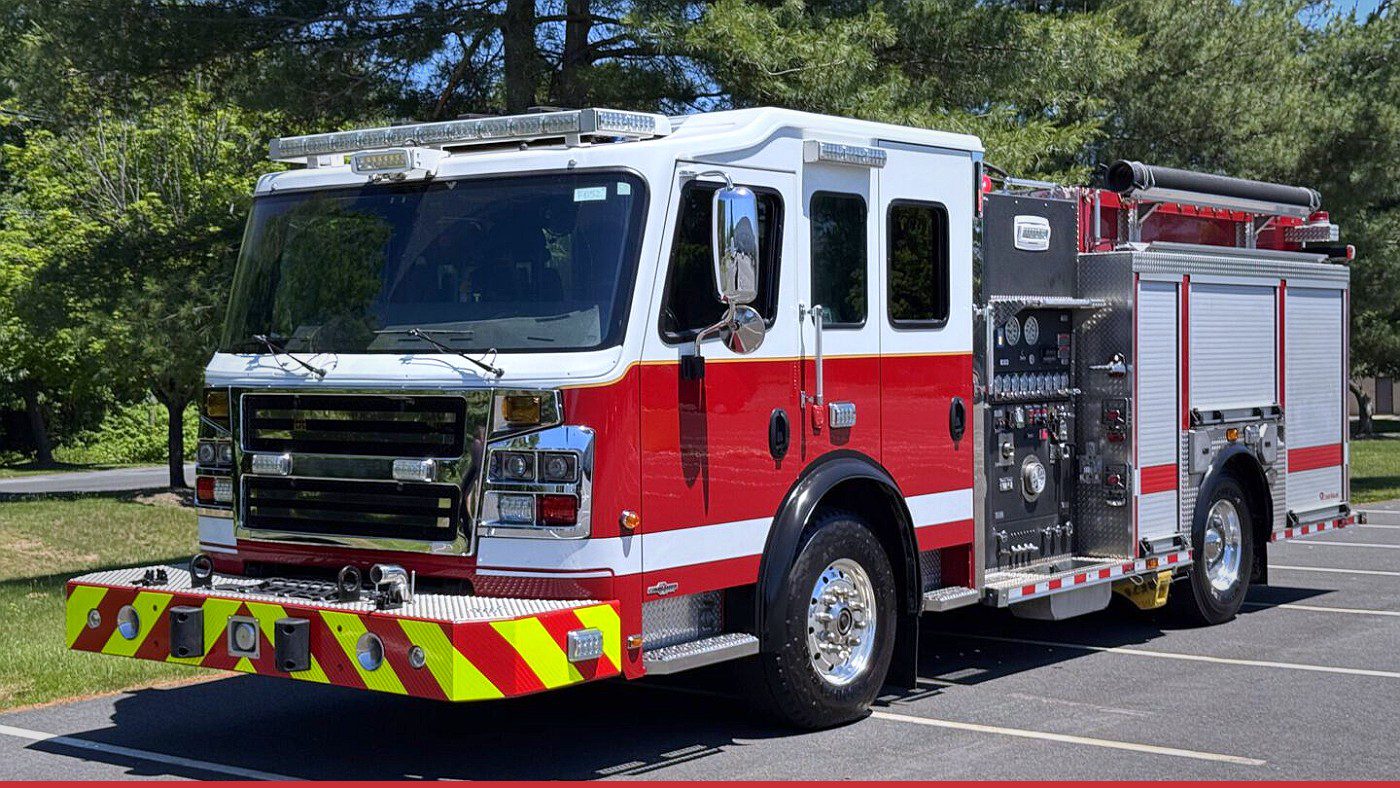
Every refurbished fire truck is a used truck, but not every used truck is refurbished. “Used” only describes a truck’s history, so a used rig could be sold exactly as it sits. “Refurbished” (or “reconditioned”) means the truck has been mechanically gone through and re-certified before it’s sold. A “remount” is a different thing again: an existing body moved onto a new chassis. The word on the listing means little until you know what work was done and what’s documented.
Key Takeaways
- “Used” describes ownership history only; a used truck can be sold as-is with nothing done to it.
- “Refurbished” and “reconditioned” mean the truck was mechanically gone through and re-certified before sale, so it usually costs more than a department-direct used truck.
- A “remount” moves an existing body or module onto a new chassis, which is standard in the ambulance world and rare for fire apparatus.
- The NFPA standard that governs fire apparatus refurbishing is now NFPA 1910, which absorbed the old NFPA 1912 in the 2024 consolidation and defines Level I and Level II refurbishment.
- The way to trust a “refurbished” claim is documentation: a written inspection, a current NFPA pump test, and an aerial certification where it applies.
What’s the difference between a refurbished and a used fire truck?
A refurbished fire truck is a used truck that a seller has mechanically gone through and re-certified before selling it, while a plain used truck may have had nothing done to it at all. Both trucks are “used” in the sense that another department owned and ran them. The difference is the work in between.
Buyers run into three or four words for the same lot of trucks, so here’s what each one actually means:
| Term | What it means | What was done | Typical cost effect |
|---|---|---|---|
| Used (as-is) | Sold in whatever condition it sits, often department-direct or at auction | Possibly nothing beyond a wash | Lowest price, highest unknown |
| Refurbished / reconditioned | A used truck gone through and re-certified for resale | Fluids and maintenance at minimum, up to motor, pump, and electrical work | Costs more than as-is; you’re paying for the work and the assurance |
| Remount | An existing body or module set onto a new chassis | Old box kept, new chassis underneath | Priced between a used truck and a new build |
An as-is auction truck is “used” but untouched, and the condition is on you to verify. A reconditioned truck from a dealer is used and refurbished, which is why it carries a higher price. Fire Truck Center reconditions each truck and runs a 150-point inspection before delivery, so “used” on our lot already means “gone through.” You can browse our reconditioned fire trucks for sale to see what that looks like in practice.
The main difference between a used truck bought straight from a department and a refurbished truck from a dealer is cost. The refurbished truck costs more, but you’re buying something you can be sure of.
What does refurbished or reconditioned actually include?
On a reconditioned used truck, refurbishment ranges from fluids and maintenance at a minimum up to motor work, pump repair, and electrical work, depending entirely on what the inspection turns up. There’s no fixed checklist that applies to every truck, because every truck comes in with different needs.
At Fire Truck Center, the work usually looks like this:
- At a minimum, the truck goes through maintenance like replacing fluids.
- The motor gets checked for leaks and performance.
- The pump gets checked for leaks and vacuum issues, then pump-tested and certified.
- Electrical components, lighting, and sirens get checked and repaired as needed.
- Anything found wrong gets fixed, because the truck ships with a 30-day satisfaction guarantee.
We also inspect a truck before we buy it, not after, so a lemon never reaches the lot in the first place. That’s a different order of operations than buying whatever’s available and hoping it cleans up.
“Refurbished” carries a second, more formal meaning too: a full refurbishment project where a department sends its own apparatus to a shop to be rebuilt or upgraded. That kind of work is defined by the NFPA and split into levels.
What do NFPA Level I and Level II refurbishment mean?
NFPA Level I and Level II are the two refurbishment levels defined in NFPA 1910, the current standard for inspecting, maintaining, refurbishing, testing, and retiring in-service emergency vehicles. NFPA 1910 took over apparatus refurbishing in the 2024 standards consolidation, absorbing the former NFPA 1912. If you see a shop cite NFPA 1912, that’s the old number for the same work.
- Level I refurbishment is essentially assembling a near-new apparatus: a new chassis frame, cab, front axle, steering, and suspension, reusing inspected components for the rest. A Level I refurbished truck has to meet the applicable chapter of NFPA 1900, the current standard for building fire apparatus.
- Level II refurbishment upgrades major components or systems to the standards that were in effect when the original truck was built, rather than to a brand-new spec.
Keep NFPA 1910 and NFPA 1900 straight, because they get mixed up often: NFPA 1910 covers what happens to a truck already in service, including refurbishment, while NFPA 1900 covers how a new truck is built. A formal Level I or Level II project runs on a contractor’s timeline, commonly three to six months, which is still far shorter than a multi-year wait for a new build.
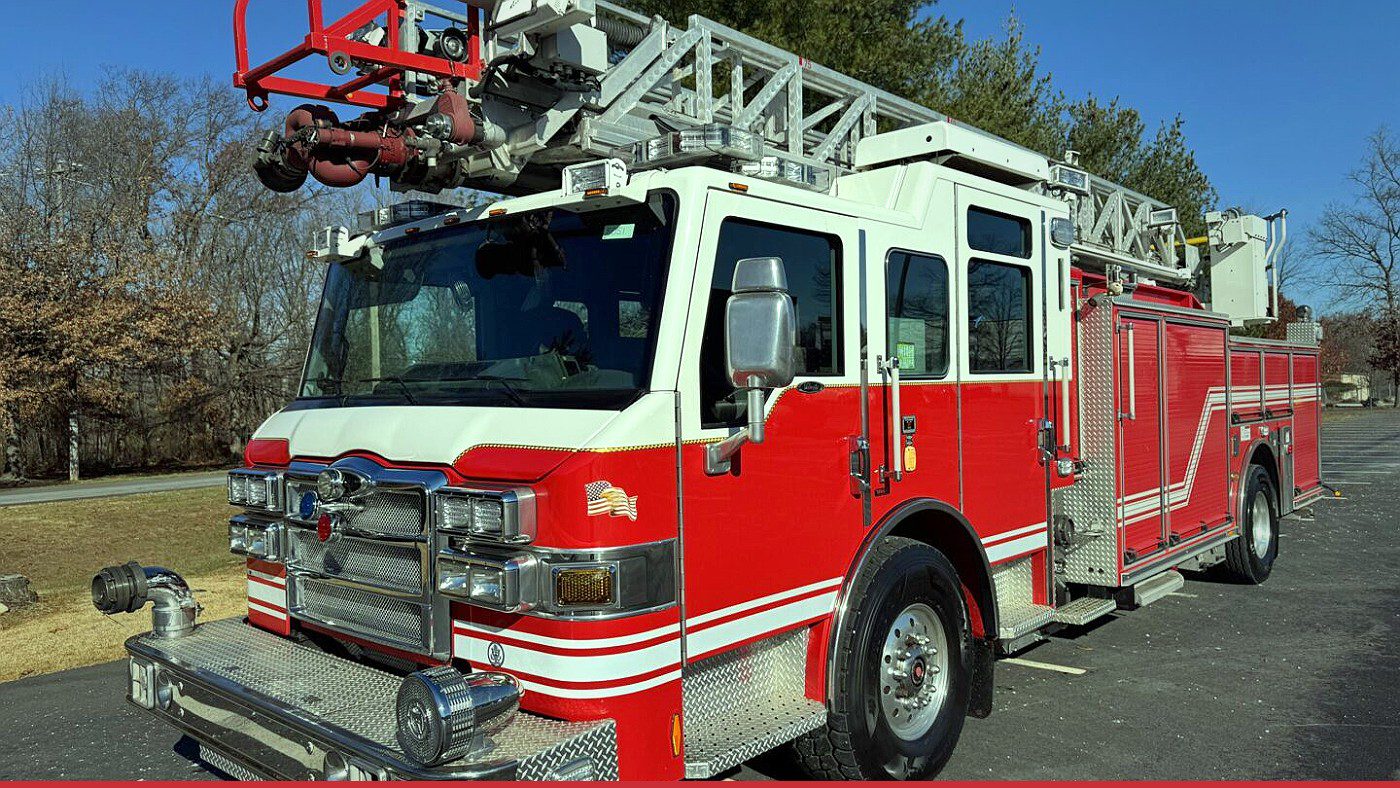
What is a fire truck remount, and how is it different?
A remount reuses an existing body or module and installs it on a brand-new chassis, which makes it different from both a used truck and a refurbishment. The old box stays; the chassis underneath is new. It’s a way to keep a good body in service when the chassis has worn out.
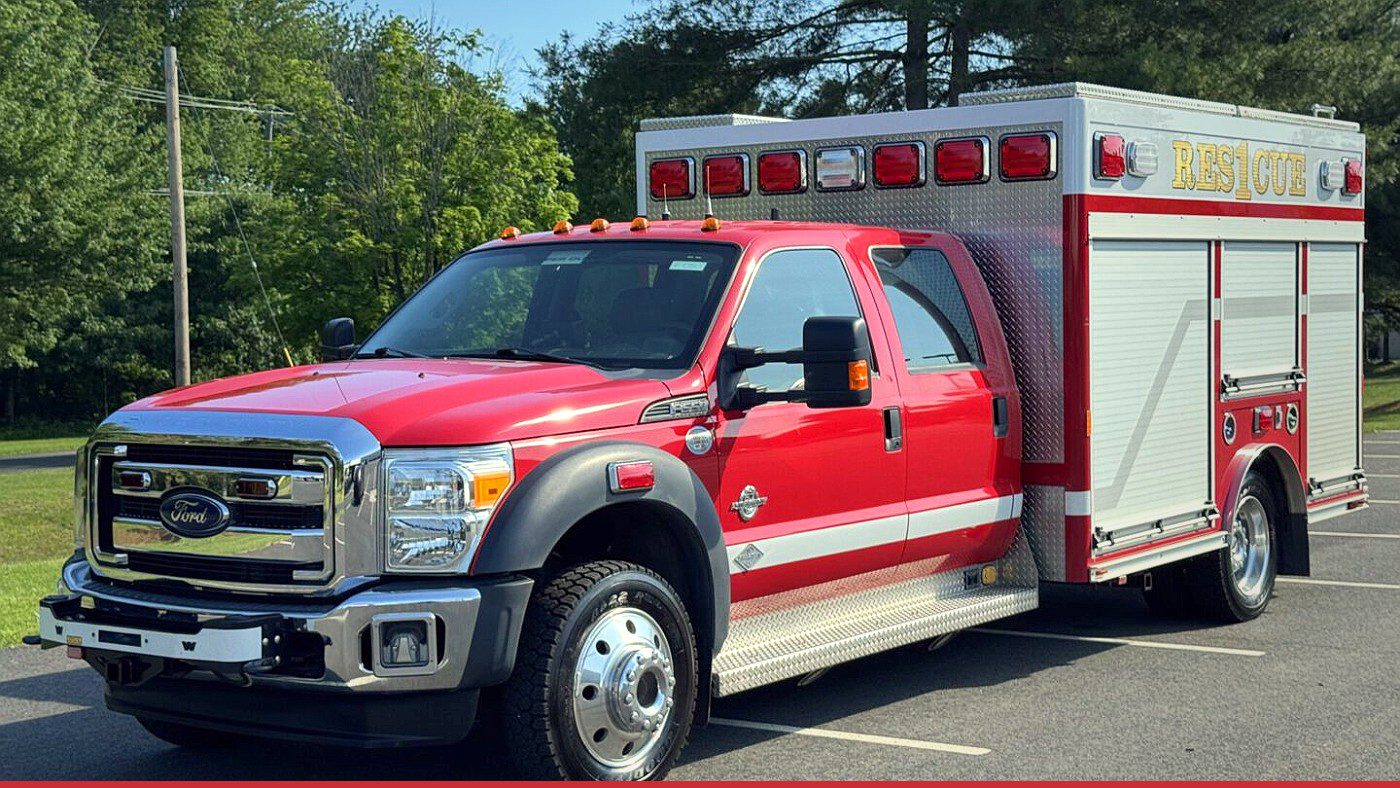
Remounts are standard practice in the ambulance world, where the patient module is often worth more than the chassis and gets moved to a fresh one every several years. Ambulances are handled at Fire Truck Center through our sister company, Global Emergency Vehicles, so remounting is familiar ground for us.
On heavy fire apparatus, a true remount is rare. The closest equivalent is a Level I refurbishment, where a new chassis and cab go under reused, inspected components. So if a listing calls a pumper or aerial “remounted,” ask what that actually means on that truck: a new chassis under an old body is a real rebuild, not a detail job.
Does a refurbished fire truck cost more than a used one?
A refurbished fire truck usually costs more than the same truck bought as-is straight from a department, because labor and parts went into it and it’s been re-certified. That higher price buys assurance along with the truck. Buy peer-to-peer and the price is lower, but the condition is on you to verify, and there’s no one standing behind it if something’s wrong.
There’s no flat rate for refurbishment. A formal contractor refurbishment is priced by scope, since a truck with a solid frame and minor corrosion needs far less than one with drivetrain or pump problems. That’s why “how much does it cost to refurbish a fire truck” has no single answer: it depends on what the truck needs.
For a used truck that’s already reconditioned and for sale, the price reflects the truck plus the work already done. Reconditioned used apparatus still lands well below a new build, and every truck is priced individually with financing available. For type-by-type ranges, our used fire truck price guide breaks down what pumpers, aerials, tankers, brush trucks, and rescues actually sell for.
How can you tell a refurbished truck was really gone through?
Ask for documentation. A real reconditioning produces paperwork: a written inspection, a current third-party NFPA pump test, and an aerial certification on any aerial. Fresh paint and new decals prove nothing about the frame, the pump, or the drivetrain.
Before you sign, ask for proof on the things that matter most:
- A written inspection covering the frame, corrosion, motor, transmission, and drivetrain.
- A current NFPA pump test showing the pump performs to spec.
- An aerial certification if it’s a ladder, quint, or platform.
- Maintenance records for any major work the seller says was done.
The most common mistake departments make buying used is not checking carefully enough, because there are unreliable sellers who just want to unload apparatus that isn’t worth putting back in service. Documentation is how you tell a reconditioned truck from a repainted one. If you want a full walkthrough, our guide on how to inspect a used fire truck covers each point in order.
Every truck Fire Truck Center sells clears a 150-point inspection with third-party NFPA pump tests and aerial certifications, and ships with a 30-day satisfaction guarantee: return it within 30 days for any reason for a full refund, and we pay the return freight. Thirty days is enough to confirm a truck is mechanically sound.
Frequently Asked Questions
Is “reconditioned” the same as “refurbished”?
Yes, in the used-apparatus market “reconditioned” and “refurbished” are used interchangeably, and both mean a used truck was mechanically gone through and re-certified before sale. Neither term has a fixed legal definition on a resale listing, which is why the real question isn’t the word but the documentation behind it. Ask what work was done and what’s certified.
Is a refurbished fire truck NFPA compliant?
A refurbished fire truck is NFPA compliant when its pump and aerial have passed current third-party testing and its refurbishment meets the applicable NFPA standard. Pump tests and aerial certifications confirm the truck is safe to operate, and a formal Level I or Level II refurbishment is built to meet NFPA 1900 or the standard in effect when the truck was made. Ask for the current test and certification paperwork before you buy.
Can you finance a refurbished fire truck?
Yes, you can finance a refurbished fire truck through lenders that specialize in emergency vehicles. The application is straightforward, and a department with solid financials and no legal issues usually qualifies without much trouble. Financing lets a department spread the cost of a service-ready truck rather than paying all at once.
How many miles or hours is too many on a used fire truck?
Fire Truck Center’s general guideline is a cutoff around 100,000 miles and 10,000 engine hours, though every department sets its own limit. Many good used trucks are 10-to-20-year-old reserve rigs with roughly 10,000 miles that barely ran and can look visually like-new. Low mileage matters more than age on apparatus that spent its life as a backup.
Not sure whether the truck you’re looking at was really reconditioned or just cleaned up? Tell us the type and spec you need and we’ll help you find the right one, or build it. Every used truck we sell is reconditioned, put through a 150-point inspection with NFPA pump and aerial certifications, and backed by a 30-day satisfaction guarantee. Browse current service-ready inventory or call us at (215) 559-9119.
Sources

 CALL US NOW