

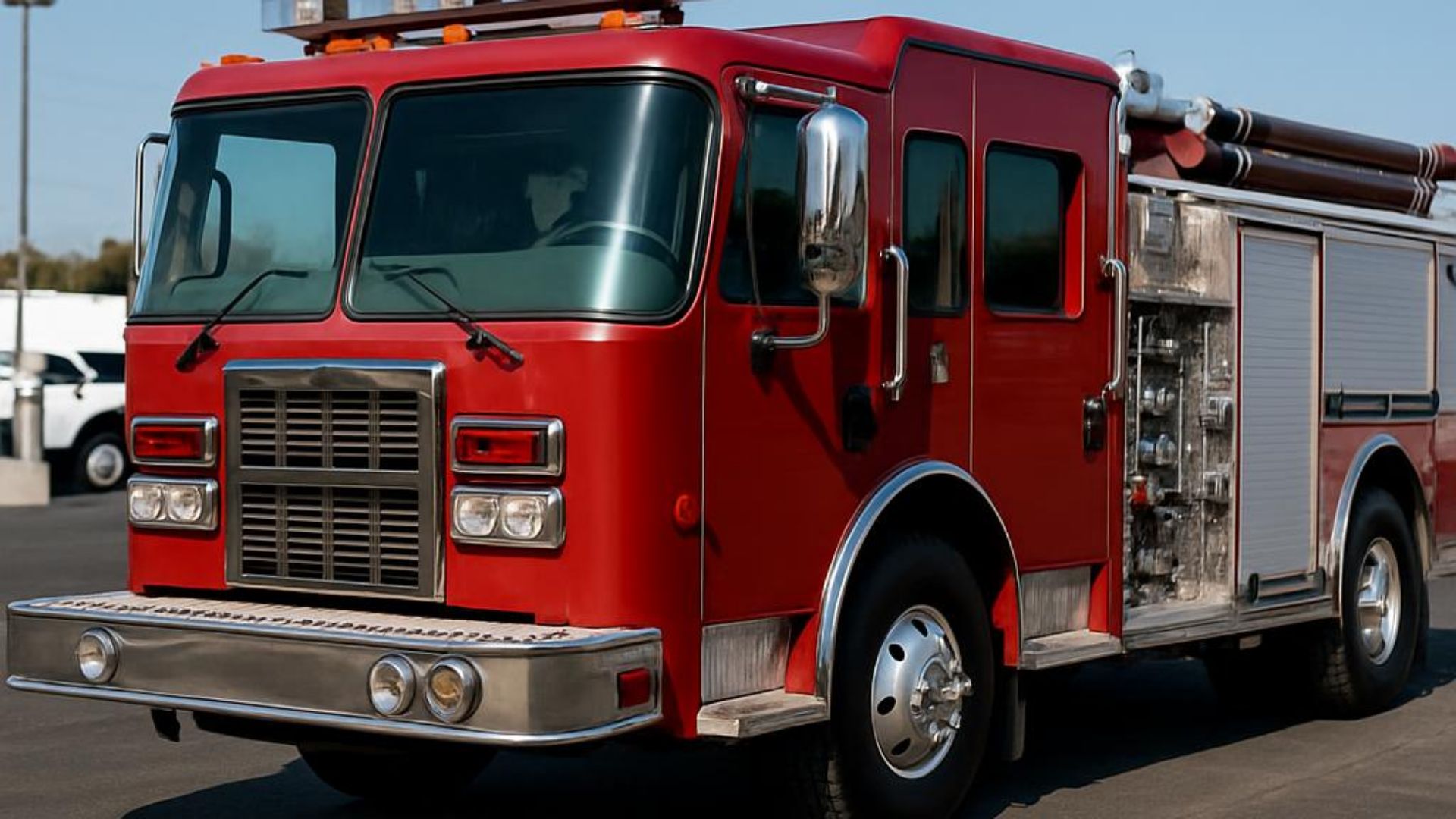
Engine hours matter more than mileage for evaluating a used pumper or rescue truck. A first-out pumper can run its engine for hours at a fire scene without moving an inch — pumping, idling at load, running a generator. The odometer counts none of that time. Engine hours do.
Key Takeaways
- Engine hours capture engine wear that road miles miss — this matters most for pumpers and rescue trucks with heavy idle and pump duty.
- A healthy miles-per-engine-hour ratio on a first-out pumper runs between 5 and 10. Below 5 signals heavy idle + pump load; inspect closely.
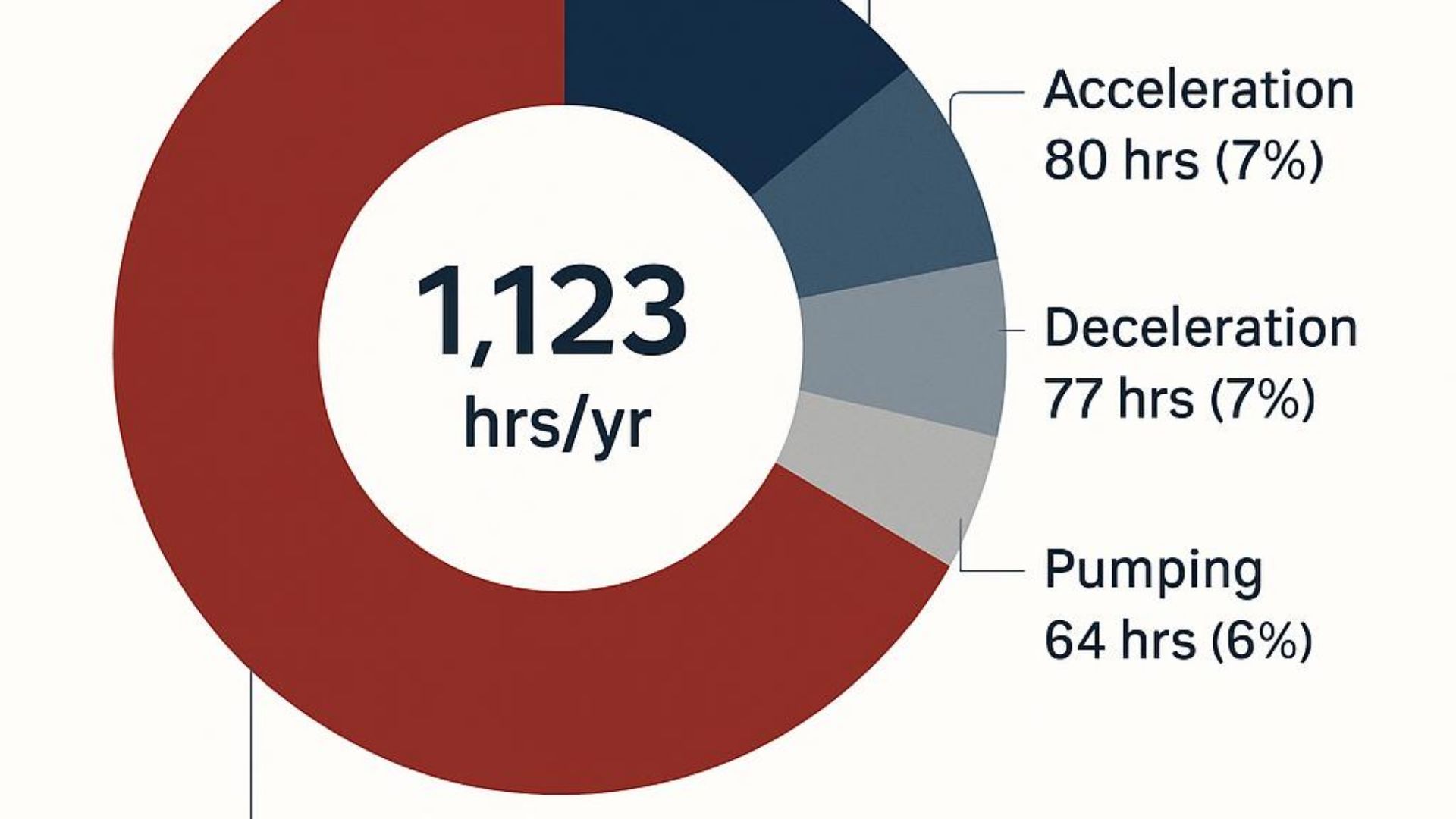
- FAMA’s Apparatus Duty Cycle study shows urban pumpers average just 5.5 road miles per engine hour — 66% of their annual engine hours are “stopped with engine running.”
- Aerials are the opposite: they average only about 69 engine hours per year. For aerials, aerial cycle count and structural condition matter far more than engine hours.
- Fire Truck Center’s threshold when buying used apparatus for inventory is 100,000 miles and 10,000 engine hours — roughly 10 miles per hour.
Table of Contents
- Why doesn’t mileage tell the whole story on fire apparatus?
- How much engine wear does one idle hour add?
- What is a healthy miles-per-engine-hour ratio on a used fire truck?
- How does the calculation differ by apparatus type?
- What else should you check alongside the numbers?
- FAQ
Why doesn’t mileage tell the whole story on fire apparatus?
A fire truck’s odometer only counts road miles — the distance from the station to the incident and back. It does not count the hours the engine ran while the truck sat on scene, pumping, idling, or running auxiliary systems. For a first-out pumper, those stationary engine hours can represent more engine wear than the drive itself.
FAMA’s Apparatus Duty Cycle study breaks down exactly where a pumper’s engine hours go. For an urban first-out pumper, 747 of 1,123 annual engine hours — 66% — fall under “stopped with engine running, pump off.” The engine is running under load. The truck is not moving. The odometer shows nothing.
Two trucks with 50,000 miles can have 2,000 engine hours or 8,000 engine hours. That is a fourfold difference in how hard the engine worked. The odometer cannot tell you which is which.
How much engine wear does one idle hour add?
As a maintenance proxy, most diesel fleet managers use 25 to 36 miles of equivalent engine wear per idle hour. There is no single SAE standard — this is a service-interval heuristic that varies by engine and duty cycle.
The Cummins B-series OEM maintenance schedule for MT45/55 vehicles puts the conversion at 36 miles per idle hour. Ford’s conversion formula uses 33 miles per hour. A conservative fleet rule of thumb is 25 miles per hour.
For fire apparatus, actual engine wear often runs higher than the heuristic suggests. A pumper running its water pump adds load on top of idle — the engine is not just turning over, it is working against the pump. When thinking through how hard an engine has been run, 25–30 miles per idle hour is a reasonable floor, not a ceiling.
What is a healthy miles-per-engine-hour ratio on a used fire truck?
Divide the odometer reading by the engine hour meter. The result is miles per engine hour. It tells you the average speed at which the engine ran and what kind of life the truck lived.
For a first-out pumper, expect roughly 5 to 10 road miles per engine hour. FAMA’s data gives two real-world benchmarks:
- Urban first-out pumper: 6,126 miles/yr ÷ 1,123 engine hours/yr = 5.5 miles per hour
- Rural volunteer pumper: 2,352 miles/yr ÷ 247 engine hours/yr = 9.5 miles per hour
What the ratio tells you — first-out pumper
Calculate your truck’s ratio
Enter the odometer reading and engine hours to see where this truck lands.
A ratio below 5 means the truck spent a large share of its running time at idle or on the pump — structure fires, extended standby, pump operations. Inspect carefully before buying. A ratio above 10 often points to reserve duty, a tanker-style operational role, or a rural department with light call volume.
At Fire Truck Center, our threshold when buying used apparatus for inventory is generally 100,000 miles and 10,000 engine hours — a ratio of about 10 miles per hour. That sits at the upper range of what a well-used suburban pumper accumulates over 15 years of average service. Browse service-ready used apparatus that’s passed our 150-point inspection — that’s what we buy against.
How does the calculation differ by apparatus type?
Pumpers and rescue trucks accumulate engine hours quickly because their engines run under load while the truck sits on scene. Aerials are different. FAMA data puts the average at just 69 engine hours per year, far below any first-out pumper.
On an aerial, the ladder mechanism carries the stress. The engine is a secondary concern.
| Apparatus type | Primary signal | Secondary signal | Why |
|---|---|---|---|
| Pumper | Engine hours | Miles-per-hour ratio | Heavy idle + pump duty; odometer understates engine wear |
| Rescue truck | Engine hours | Maintenance records | Similar idle profile to pumpers; high PTO load |
| Aerial / quint | Aerial cycle count + age | Engine hours (low, ~69/yr avg.) | Ladder mechanism takes the stress, not the engine |
| Tanker / tender | Mileage | Engine hours | More road time, less scene idle; tank condition equally critical |
| Wildland / brush truck | Mileage + corrosion | Engine hours | Off-road duty cycles; corrosion often the bigger risk |
If you’re evaluating used pumpers specifically, engine hours and the ratio are the first two numbers to pull. For a tanker, start with mileage and inspect the tank.
A note on pump hours: Dealers and buyers disagree on how much pump hours matter on their own. Many experienced apparatus buyers say pump hours do not drive a purchasing decision in isolation — a maintained pump that passes a third-party NFPA pump test is serviceable regardless of how many hours it logged. Others treat 1,000 pump hours as a point to ask questions. In practice, a passed NFPA pump test is a more reliable signal than any raw pump-hour count.
What else should you check alongside the numbers?
The ratio is a prompt to investigate, not a verdict on its own. Our founder, who buys used apparatus for reconditioning, treats an odd hours-to-miles relationship as a documentation question before it is a mechanical one:
“We pay close attention to the relationship between engine hours and mileage. If the numbers look unusual, that’s a reason to investigate further. Sometimes it can indicate that the odometer has been replaced, but it can also reflect how the department used the truck. That’s why it’s very important to check the vehicle’s history and verify that the mileage is accurate.”
That is the part buyers miss. A ratio well outside the normal band can mean heavy idle duty, which is ordinary for a first-out pumper — or it can mean the odometer was swapped at some point and the reading no longer describes the truck. Both look identical on a spec sheet. Ask for the service history and confirm the mileage against it before you draw any conclusion from the ratio.
Engine hours and mileage measure how much an apparatus ran. They do not tell you how it was treated. Four factors consistently affect the real condition of a used fire truck:
Maintenance records
Oil change intervals, pump test history, aerial certifications, and service logs. A truck with 9,000 engine hours and a clean maintenance record is usually a better buy than one with 5,000 hours and no paperwork.
Geographic origin
Northern trucks accumulate road salt and moisture exposure across their service life. We look specifically for apparatus from smaller southern and rural departments — they tend to carry significantly less corrosion than trucks that spent 15 years on northern city roads.
Structural integrity
Frame condition is the most common thing buyers skip. A pump can be rebuilt. A cracked frame is a different problem. On aerials, that means the turntable, pedestal, and full ladder structure — no cracks in welds or the load-bearing components.
Test certifications
A third-party NFPA 1901 pump test verifies the pump performs to standard. On aerials, a full aerial certification covers the mechanism’s structural and functional integrity. The hour meter tells you how long the apparatus ran. The test tells you it still works.
Every used pumper at Fire Truck Center goes through a 150-point inspection and a third-party NFPA pump test before it leaves our facility. The 30-day satisfaction guarantee backs all of it. That’s a full refund for any reason within 30 days, with FTC covering return freight.
Frequently Asked Questions
How many engine hours is too many on a used fire truck?
There is no universal cutoff, but common reference points are 10,000 engine hours (Fire Truck Center’s inventory threshold) and 2,400 engine hours (a replacement indicator cited in fire service fleet literature). The miles-per-engine-hour ratio matters as much as the raw number: 10,000 hours at 100,000 miles is a very different truck than 10,000 hours at 50,000 miles. Use both the hour meter and the ratio — each tells you something the other misses.
Do pump hours matter when buying a used fire truck?
A passed third-party NFPA pump test is a more reliable indicator than any pump-hour threshold. Many experienced buyers say pump hours alone don’t determine a buying decision — a maintained pump that passes vacuum and pressure testing is serviceable regardless of the count. If pump hours are elevated and no NFPA test record exists, require one before committing to the purchase.
Is mileage or engine hours more important on a used pumper?
Engine hours are more important on a used pumper. Pumpers run their engines at load during incidents without moving — pumping, running auxiliary systems, idling through extended standby. FAMA’s Apparatus Duty Cycle study shows an urban first-out pumper accumulates roughly 1,123 engine hours per year while driving only 6,126 road miles, with 66% of those hours logged while the truck was stationary.
What is a good miles-per-engine-hour ratio for a fire truck?
For a first-out pumper, 5 to 10 road miles per engine hour is typical. Urban first-out pumpers average about 5.5 miles per hour; rural volunteer pumpers average about 9.5. A ratio below 5 warrants a closer inspection — the truck saw heavy idle and pump duty. A ratio above 10 often indicates reserve duty or a tanker-style operational role.
What’s the difference between engine hours and pump hours on a fire truck?
Engine hours measure total time the engine ran, regardless of what the truck was doing — driving, idling, or actively pumping water. Pump hours measure only the time the water pump was engaged. Engine hours give a broader picture of drivetrain wear. Pump hours are most useful for assessing pump condition specifically.
Browse inspected, service-ready used apparatus at Fire Truck Center. Every truck in our inventory has passed a 150-point inspection and comes with a 30-day satisfaction guarantee — a full refund if you’re not satisfied, for any reason, with FTC covering return freight.
Sources
- FAMA Apparatus Duty Cycle White Paper (TC001)
- Fire Apparatus Magazine — Fleet Replacement Challenges Equal Opportunities
- Fire Apparatus Magazine — Apparatus Purchasing: Used Fire Trucks, Part 2
- Firehouse.com Forums — Engine Hours vs. Road Miles
Hours and miles tell you how hard a truck has worked. For how those numbers map onto a truck’s total service life, see how long a fire truck actually lasts.

 CALL US NOW