

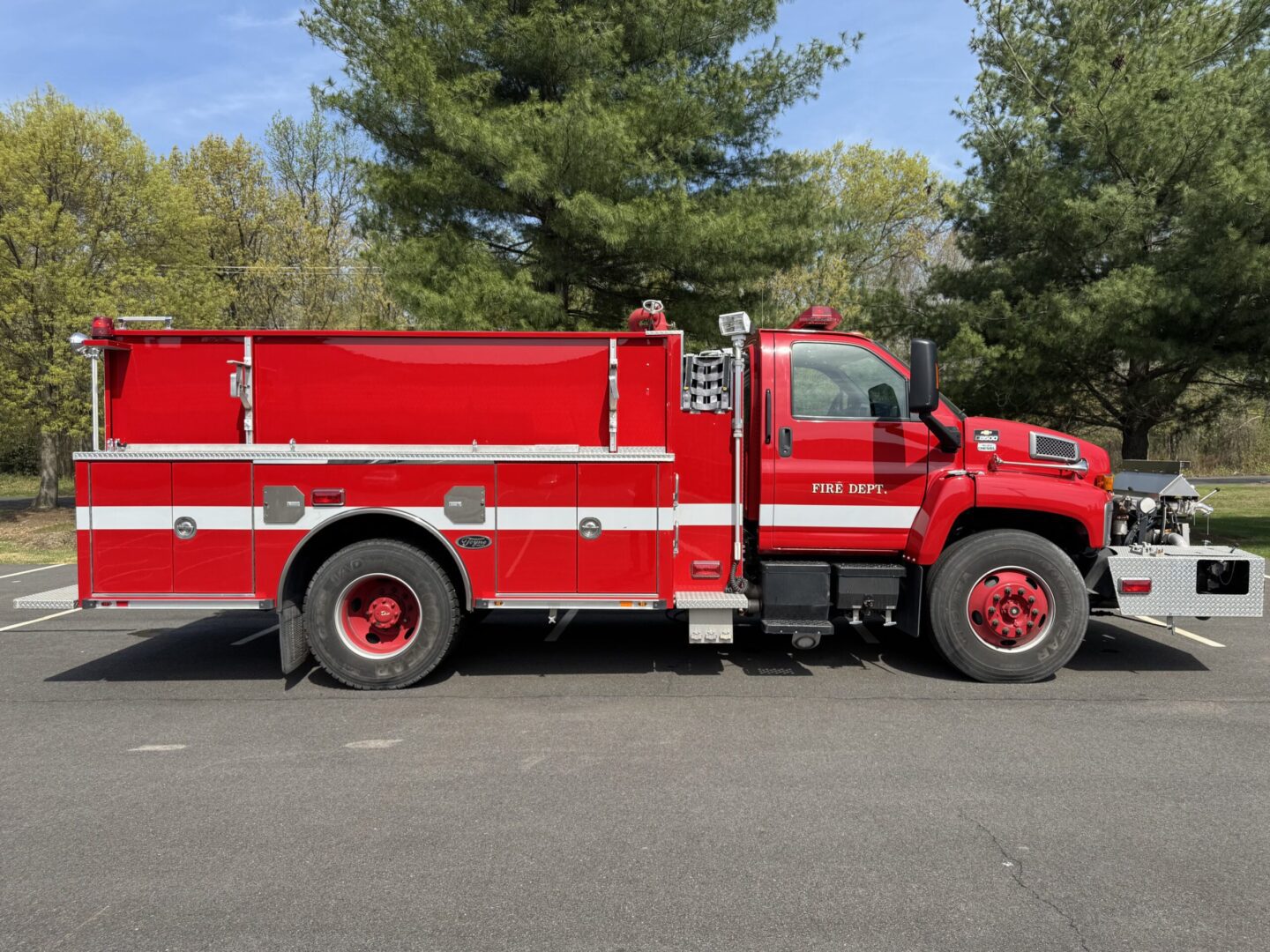
Fire truck lifespan runs about 15 years on the front line and up to 25 years total, which is where NFPA’s guidance points. Condition matters more than the calendar, though. Fire Truck Center’s own buying cutoff is roughly 100,000 miles and 10,000 engine hours, and plenty of 15- to 20-year-old reserve engines come in well under both. As of October 2026, the harder problem is timing, because a new engine ordered today can take three to four years to show up.
Two deliveries this past week show what that gap looks like in practice. The Derby (KS) Fire Department welcomed Engine 81 on Friday, October 2 — a 2026 Pierce Enforcer with a 600-gallon tank and a 2,000-GPM single-stage pump. Its apparatus committee started designing the truck in 2022 and placed the order in January 2023.
A day later in Missouri, the Brookline Fire Protection District held a push-in ceremony for a 2025 Ferrara with a 1,000-gallon tank. It replaced a single-cab engine from 1999 — 27 years of service.
What is the average fire truck lifespan?
Most fire apparatus serves 15 years in a front-line assignment, then another 5 to 10 years in reserve, for a total working life of 20 to 25 years. Departments that run high call volumes often retire sooner. Rural and volunteer departments with a few hundred calls a year routinely go longer.
That spread is why two trucks built the same year can be in completely different shape. A city engine running 4,000 calls a year burns through its life in a decade. A reserve pumper at a small department may put 500 miles on the odometer annually and still look close to new at 19 years old.
What does NFPA say about retiring a fire truck?
NFPA recommends replacing front-line apparatus after 15 years and reserve apparatus after 25 years, and NFPA 1910 carries the retirement recommendations for in-service emergency vehicles. The annex language is softer than most people assume: apparatus more than 15 years old that has been properly maintained and is still serviceable should be moved to reserve status and upgraded toward the current standard. Apparatus over 25 years old, or never built to an applicable NFPA standard, should be replaced.
None of that is law. It is guidance, and it leaves room for judgment. If you want the detail on which standard governs what, we broke it down in NFPA 1900 versus NFPA 1910.
| Apparatus age | NFPA-guided status | What it means if you’re buying |
|---|---|---|
| 0–15 years | Front-line service | Highest resale value; most of these trucks are still in service somewhere |
| 15–25 years | Reserve status, upgrade recommended | Where most well-kept used apparatus lives; verify pump test and certifications |
| Over 25 years | Replacement recommended | Can still work for a second-out or support role; expect to budget for upgrades |
Why is the 15-year rule harder to follow in 2026?
Because the replacement pipeline got longer than the planning cycle. Derby’s engine took nearly four years from first design meeting to delivery, and crews still need weeks to mount equipment and finish training before it answers a call. A department that decides in 2026 it needs a new engine is budgeting for a truck that arrives in 2029 or 2030.
Price moved with it. Testifying to a US Senate subcommittee in September 2025, IAFF General President Edward Kelly put pumpers at around $1 million and ladder trucks above $2 million in some areas, and gave one concrete line: Spartan engines that cost $589,000 in 2020 ran close to $1.1 million by 2025. We cover what sits behind those numbers in why fire trucks got so expensive.
What happens when a department can’t replace on schedule?
The truck stays in service past the recommendation. Brookline’s 1999 engine ran 27 years before its replacement arrived, and it took a $10 million bond that voters approved in 2025 to fund three engines. When the district went to its voters, its fleet averaged 18.5 years old and its call volume had risen 54 percent since 2020. That is the common pattern now: trucks held well past 25 years, reserve units pulled into front-line duty, and repair bills climbing on apparatus that was supposed to be gone.
The fallback most departments overlook is buying an inspected used truck to fill the gap. You keep the new build in the queue and put a service-ready engine on the floor in weeks instead of years.
When should you repair instead of replace?
The clearest financial test in the business: if annual repair costs run past 10% of what a new truck would cost, replacement deserves a hard look. Beyond the dollars, a few failures signal the end of a truck’s useful life rather than a bad month.
- Frame or subframe corrosion. Structural rust is the one problem you cannot repair your way out of.
- Repeat drivetrain failures. A second engine or transmission event inside a year rarely stands alone.
- Aerial structural findings. Cracks at the turntable, pedestal, or ladder sections end the conversation.
- Parts no longer available. When the chassis line is discontinued or the builder is gone, downtime stretches.
- Missing modern safety systems. No rollover protection, airbags, or stability control is a crew-safety argument, not a budget one.
Pumps, wiring harnesses, warning lights, and body panels are all fixable. Frames, aerials, and drivetrains are where trucks go to die.
Does age or usage decide a fire truck’s real condition?
Usage, every time. This is the part of fire truck lifespan that spec sheets miss, and it is the whole reason the used market works.
“Some are 10 to 20 years old and still have about 10,000 miles. They’re reserve trucks at small departments that barely see action, so they’re pretty much unused and can be visually like-new. Our cutoff is generally around 100,000 miles and about 10,000 hours.” — Vitaly, founder, Fire Truck Center
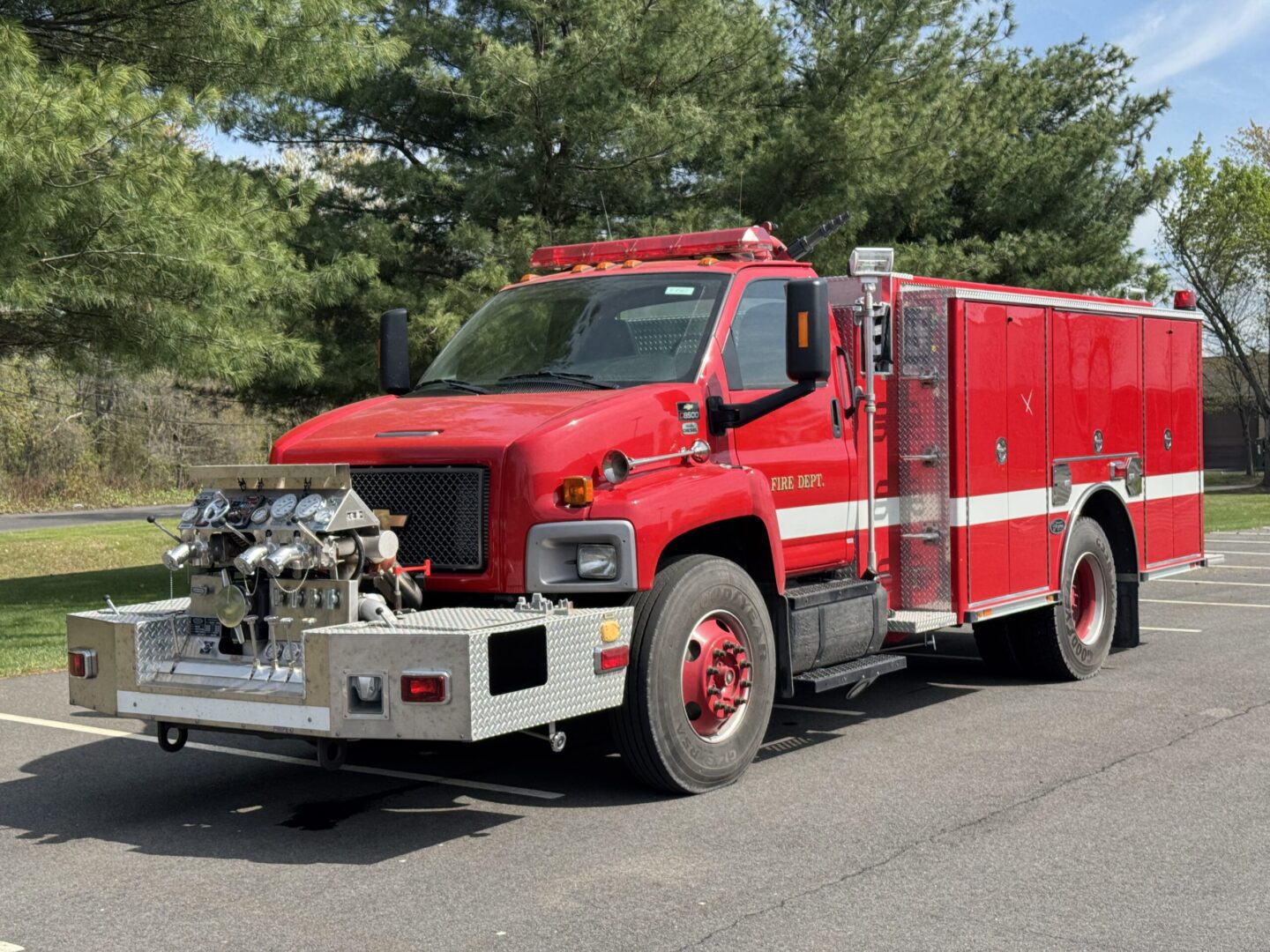
Our current inventory shows the same thing. A 2007 Chevrolet Toyne C8500 pumper on the lot right now has 8,381 miles on it. A 1996 Pierce pumper has 21,270. Those are 19- and 30-year-old trucks with less wear than a three-year-old city engine.
How many miles and hours are too many on a used fire truck?
Our guideline is about 100,000 miles and roughly 10,000 engine hours. Hours matter more than most buyers expect, because a pumper idles at scenes and on standby without moving the odometer at all. A truck with 40,000 miles and 12,000 hours has worked harder than one with 70,000 miles and 4,000 hours.
Run the ratio before you run the walkaround. We explain the math in engine hours versus mileage on a used fire truck.
What testing keeps an older truck in service?
A fire truck’s working life ends when it stops passing its tests, not on a birthday. NFPA 1910 is the standard that governs inspection, maintenance, testing and retirement for apparatus already in service, and two tests do most of the deciding.
The annual pump test. Chapter 22 of the 2024 edition covers performance testing of fire pumps, and a department runs it every year. A full test works through engine speed, the pump shift indicator, the engine control interlock, priming, vacuum, the pumping and overload runs, pressure control, gauge and flowmeter accuracy, and tank-to-pump flow.
Pass it and a certificate is issued. Fail it and you get a report listing what is wrong.
Aerial nondestructive testing. An aerial device has to pass a nondestructive test at least every five years, examining the structural weldments, the turntable, the pedestal and the ladder sections. This is the test that ends conversations about older aerials, and it is a cost of owning one rather than a cost of buying one.
For a buyer that turns into two questions worth asking before anything else: when was the last pump test, and on an aerial, when was the last nondestructive test. A truck without current paperwork is not automatically a bad truck. It is an unpriced risk, and the price should reflect that until the paperwork exists.
Can a used fire truck still have a full service life left?
Yes, if the frame is solid and the hours are low. A 15-year-old reserve engine with 20,000 miles has not used up its 15 front-line years. It used up 15 calendar years sitting in a bay.
Every truck we sell goes through a 150-point inspection covering frame and structural integrity, engine, transmission, axles, brakes, suspension, electrical, lighting, and sirens. Pump tests and aerial certifications are performed by a third party to NFPA standards. Each truck also carries a 30-day satisfaction guarantee — a full refund inside 30 days if the department isn’t happy, with return freight on us. Almost nobody else in this industry does that.
It works out. A department in New England bought a southern ladder truck from us and later said it had fewer problems than some of the new apparatus they had taken delivery of.
Does an older fire truck hurt your ISO rating?
Not for its age. ISO’s Fire Suppression Rating Schedule sets no maximum age for fire apparatus. It credits a pumper at its demonstrated capability in gallons per minute at 150 psi net pump pressure, so what gets graded is what the truck proves on the day, not the year on the title.
That matters more than it sounds for a department holding apparatus past the 15-year mark. A 20-year-old engine that still pumps its rated capacity counts the same as a new one at the same rating. An aerial carries one extra condition: its nondestructive test has to be current, at least every five years.
So the thing to protect is not the model year. It is the test record.
How should a department plan apparatus replacement in 2026?
Work backward from a four-year lead time instead of forward from a replacement date.
- Build a rolling 10- to 15-year forecast with every rig’s age, miles, hours, and annual repair spend in one place.
- Start the new-truck process at year 11, not year 15 so the build queue lands roughly when the old truck times out.
- Line up funding early. Grant cycles and bond votes take their own year or two — see AFG, VFA and USDA apparatus grants.
- Bridge the gap with inspected used apparatus rather than running a 27-year-old engine as your first-out.
- Price both paths side by side. Our 2026 used fire truck price guide has real ranges by apparatus type.
For small apparatus, there is a third path. Fire Truck Center builds its own new brush trucks and light rescue vehicles on Ford, Chevy, or Ram chassis, starting around $129,000, with build times as short as 60 days. See our custom brush and light rescue builds.
Frequently asked questions about fire truck lifespan
How long does a fire truck last?
A fire truck typically lasts 15 years in front-line service and up to 25 years total, including reserve duty. Low-call-volume departments regularly run apparatus longer when the frame is sound and maintenance records are complete.
Is a 20-year-old fire truck safe to buy?
It can be, provided the frame shows no structural corrosion, the pump passes a third-party test, and any aerial device holds a current certification. The age on the title matters less than the documented condition.
What is high mileage on a fire truck?
Above roughly 100,000 miles or 10,000 engine hours is where Fire Truck Center stops buying. Many used apparatus units sit far below both figures because they spent most of their lives as reserve trucks.
Does NFPA require retiring a fire truck at 25 years?
No. NFPA 1910 recommends it in annex guidance rather than requiring it. Departments make the final call, though insurance and ISO ratings can factor in apparatus age.
How long does it take to get a new fire truck in 2026?
Three to four years is common from order to delivery. Derby (KS) ordered its engine in January 2023 and took delivery in October 2026. An inspected used truck from Fire Truck Center ships in weeks.
Get a service-ready truck without the four-year wait
Fire Truck Center has sold hundreds of used fire trucks across 49 states since 2015, from our facility at 1991 Hartel Ave, Levittown, PA 19057. Every truck is reconditioned, 150-point inspected, pump tested, and backed by a 30-day satisfaction guarantee, with financing and nationwide delivery available.
Browse the current used fire apparatus inventory or go straight to pumpers and engines in stock. Questions about a specific truck’s hours or history? Call (215) 559-9119 or email help@firetruck.center and we’ll pull the records.
Sources
- KSN-TV — Derby Fire Department welcomes new fire engine (2 October 2026)
- KY3 — Fire crews in Brookline, Mo., hold push-in ceremony for new engine (4 October 2026)
- KY3 — Brookline Fire Protection District seeking voter approval on first ever bond (11 March 2025)
- NFPA — NFPA 1910 Standard Development, 2024 edition (retirement of in-service emergency vehicles)
- NFPA — NFPA 1900 Standard Development, 2024 edition (new apparatus)
- NFPA — Emergency Response and Responder Safety Consolidation Project (plan approved April 2019)
- IAFF — What to know about the fire truck crisis (updated July 2026)
- U.S. Senate Homeland Security and Governmental Affairs — Testimony of Edward A. Kelly, General President, IAFF (September 2025)
- ISO Mitigation — Maximum Age for Apparatus, PPC Technical Subjects (undated; accessed 9 October 2026)
- UL Solutions — Fire Department Pump Performance Testing Services, NFPA 1910 Chapter 22 (undated; accessed 9 October 2026)

 CALL US NOW