

A fire truck’s “type” is a capability class from the national resource-typing system: Types 1 and 2 are structural fire engines built for buildings and hydrants, and Types 3 through 7 are wildland engines built to go off-road and pump on the move. Three specs separate them: pump flow in GPM, water-tank capacity, and gross vehicle weight rating (GVWR). Get the class right and a truck fits your run card and your grant paperwork; get it wrong and you buy the wrong tool.
Key takeaways
- Types 1–2 = structure engines (big pumps, ladders, urban work). Types 3–7 = wildland engines (smaller, 4×4, pump-and-roll).
- A Type 1 needs a 1,000 GPM pump and four crew; a Type 3 is the wildland-interface workhorse and must carry a foam system.
- A Type 6 is what most departments call a brush truck — often a Ford F-550-class 4×4.
- Structural typing (Type 1–2) is owned by FEMA/NIMS; wildland typing (Type 3–7) is owned by the NWCG, and the two standards don’t match perfectly.
- Used, every class runs a fraction of new. You can browse used fire trucks for sale by type and match the class to your budget.
What are the different types of fire trucks (Type 1 to Type 6)?
Fire engines are “typed” 1 through 7 by capability, and the number tells you what the truck can do, not who built it. Types 1 and 2 are structural engines — the full-size rigs that fight building fires with big pumps and ground ladders. Types 3 through 7 are wildland engines — progressively smaller trucks built to drive rough ground and pump water while moving.
The class lines come down to three numbers: how much water the pump moves (GPM), how much the tank holds (gallons), and how heavy the truck is allowed to be (GVWR). Here are the national minimums for each engine type.
| Type | Class | Pump (GPM @ psi) | Tank (min gal) | Max GVWR | Min crew | Pump-and-roll |
|---|---|---|---|---|---|---|
| Type 1 | Structure | 1,000 @ 150 | 300 | — | 4 | No |
| Type 2 | Structure | 500 @ 150 | 300 | — | 3 | No |
| Type 3 | Wildland | 150 @ 250 | 500 | — | 3 | Yes (foam req’d) |
| Type 4 | Wildland | 50 @ 100 | 750 | — | 2 | Yes |
| Type 5 | Wildland | 50 @ 100 | 400 | 26,000 lb | 2 | Yes |
| Type 6 | Wildland | 50 @ 100 | 150 | 19,500 lb | 2 | Yes |
| Type 7 | Wildland | 10 @ 100 | 50 | 14,000 lb | 2 | Yes |
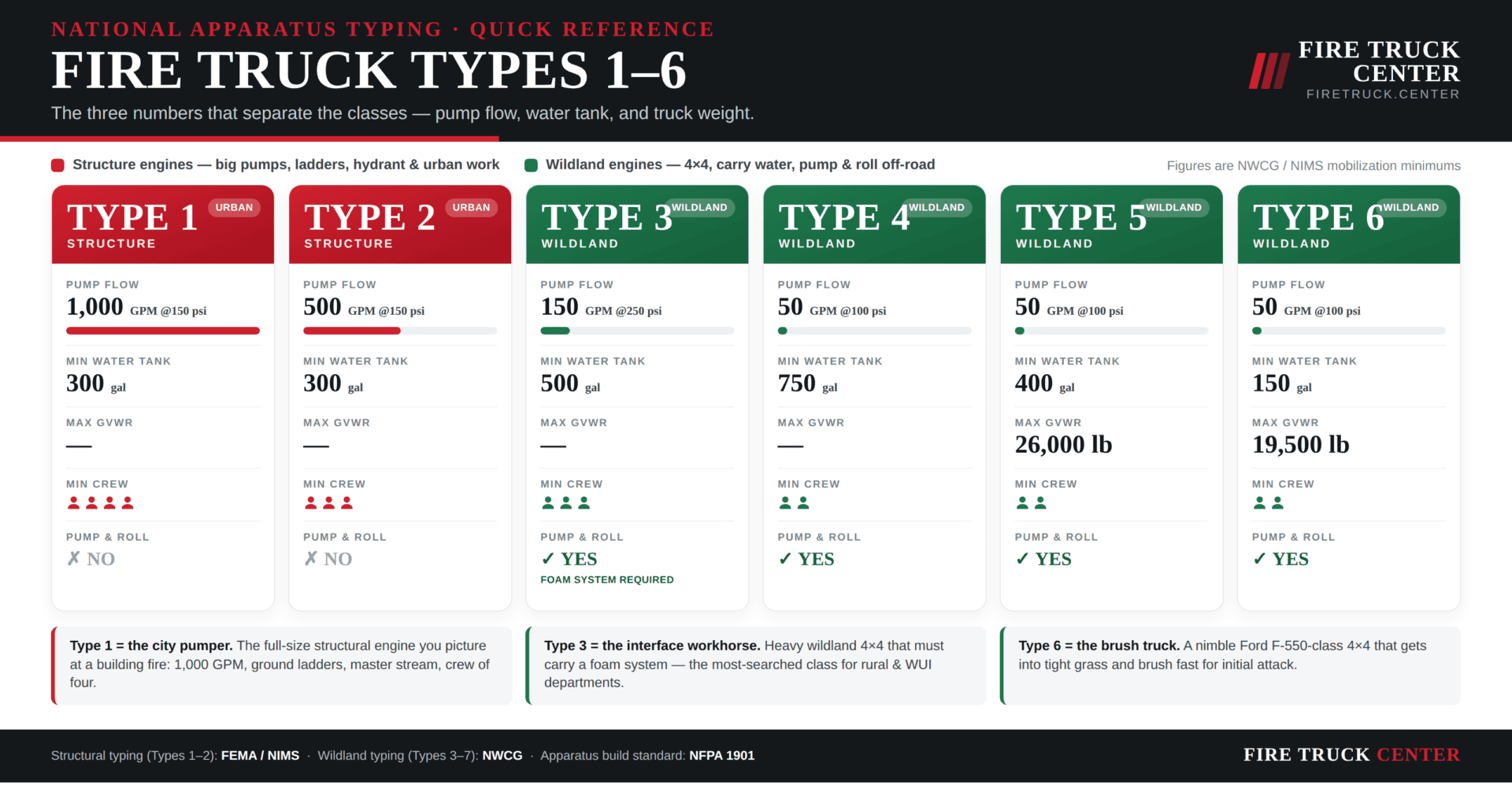
One point that trips up a lot of buyers: there isn’t a single agency behind all seven numbers. The National Wildfire Coordinating Group (NWCG) owns the wildland classes, Type 3 through 7. Structural Type 1 and Type 2 belong to FEMA’s NIMS resource typing. The two groups have worked toward matching standards for years and still carry small differences, so a “Type 1” figure you read on one site may not match another. The numbers above are the NWCG mobilization minimums.
Fire Truck Center buys and sells all of these classes, so the rest of this guide ties each type to a real truck and a real price instead of leaving it as paperwork. If you want the same trucks sorted by body style instead of class number, see our guide to fire truck types by function.
What is a Type 1 fire truck — and how is a Type 2 different?
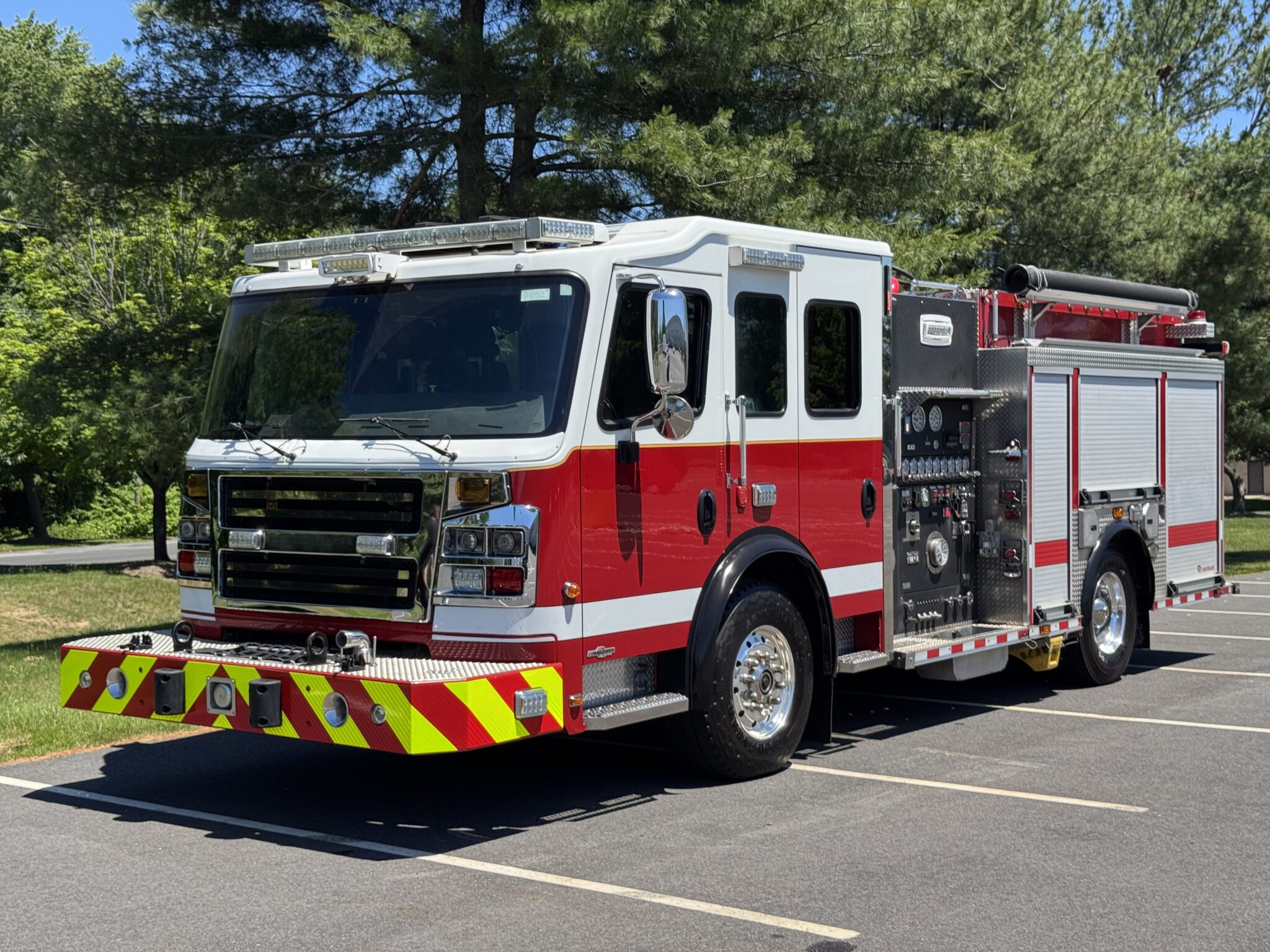
A Type 1 fire truck is a full-size structural engine built to fight building fires: a pump that moves at least 1,000 GPM, a water tank of at least 300 gallons, ground ladders per NFPA 1901, a master stream, and a crew of four. This is the standard city pumper you picture when you hear “fire engine.”
A Type 2 is the same idea one step down — a 500 GPM minimum pump and a crew of three, still carrying ladders and hose for structure work. Departments run Type 2 engines where a full Type 1 is more truck than the district needs but structural pumping is still the job.
Neither type is built to pump while driving. Both pull up to a hydrant or a scene, set up, and flow water. In the used market these are your Pierce, E-One, Rosenbauer, and Spartan pumpers, and they hold value because departments everywhere need them.
Age matters less on these than mileage. A well-kept structural engine can run reserve or second-line for years. As our team puts it after buying hundreds of them: “Some are 10 to 20 years old and still have about 10,000 miles — they’re reserve trucks at small departments that barely see action, so they’re pretty much unused and can be visually like-new.” When you’re ready to shop, our used Type 1 and Type 2 pumpers are where those rigs land.
What is a Type 3 fire truck?
A Type 3 fire truck is a heavy wildland engine built for the wildland-urban interface: a pump that moves at least 150 GPM at 250 psi, a tank of at least 500 gallons, a crew of three, and the ability to pump and roll — flow water while the truck is moving. A Type 3 is also required to carry a foam proportioner system, which separates a true Type 3 from a lookalike.
Most Type 3 engines ride on a commercial 4×4 chassis so they can leave the pavement and still carry real water. That combination — off-road capability, a 500-plus-gallon tank, foam, and pump-and-roll — is why the Type 3 is the most-searched class and the one many rural and interface departments build a response around.
Because a Type 3 has to prime and pump from a 10-foot draft lift, confirm the pump and foam system actually work before purchase, not just that the truck looks the part. On the used market these are typically International, Freightliner, and BME builds. You can see current used wildland and brush trucks in stock, and every one we sell is pump-tested and 150-point inspected first.
What are Type 4, Type 5, and Type 6 fire trucks?
Types 4, 5, and 6 are the lighter wildland engines, and each trades pumping power for water, weight, or agility:
- Type 4 carries the most water of the small classes — a 750-gallon tank minimum — with a lighter 50 GPM pump. It hauls water where a bigger engine can’t go.
- Type 5 is a smaller attack rig with a 400-gallon tank and a 26,000-pound GVWR cap, usually on a heavier pickup or medium-duty chassis.
- Type 6 is the class most departments simply call a brush truck: a 150-gallon tank, a 19,500-pound GVWR cap, and a nimble 4×4 that gets into tight grass and brush fast — think Ford F-550, or a Chevrolet or GMC one-ton.
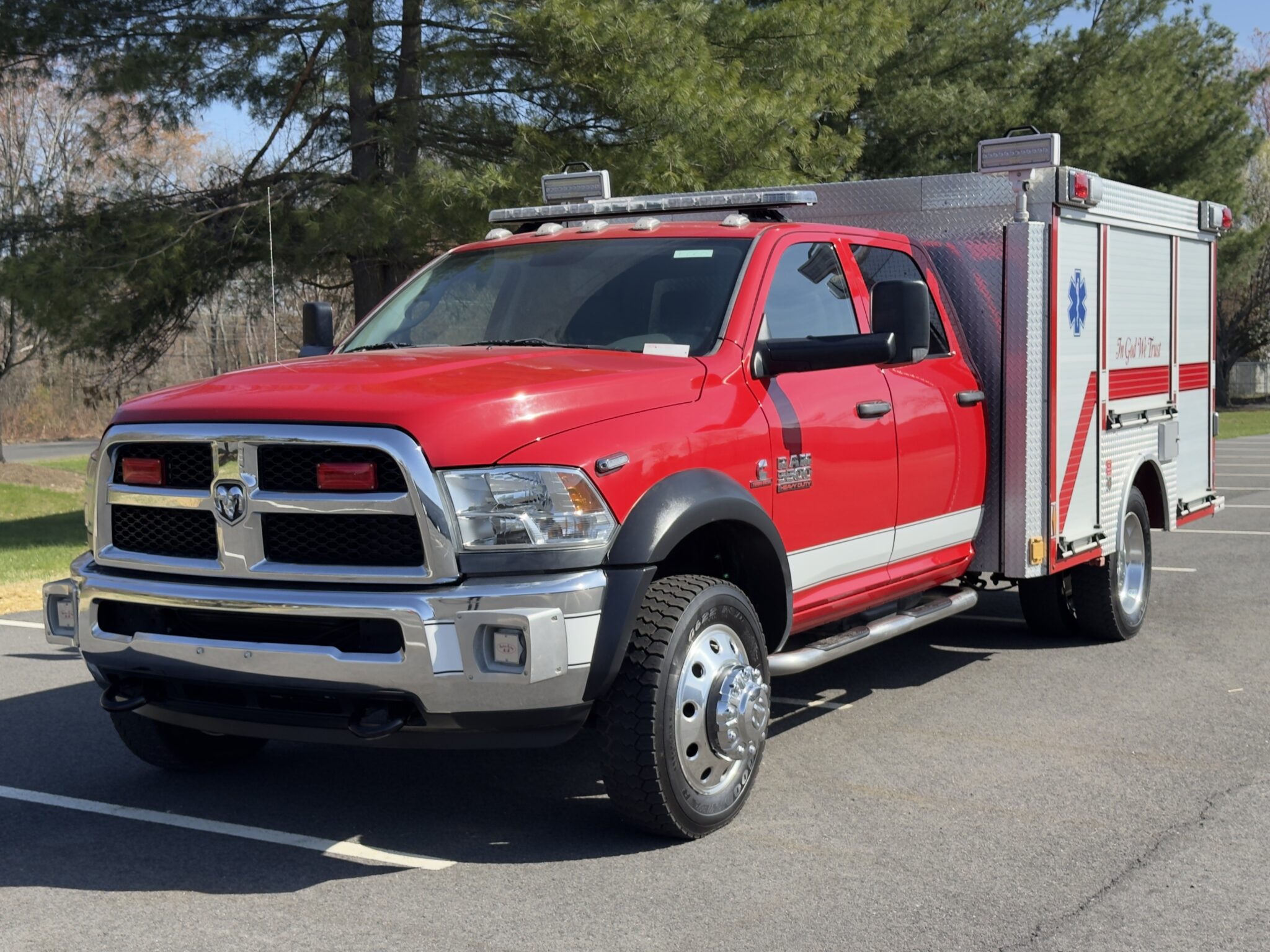
All three pump and roll, and all three are built for grass, brush, and initial attack rather than structure fires. If you’re weighing a quick-attack truck, our explainer on what a brush truck is goes deeper on the Type 6 end of the range. The smallest class, Type 7, is a slip-on or light patrol unit with a 50-gallon tank — useful as a first-out spotter, not a primary engine.
Type 1 vs. Type 3: which class does your department need?
Match the class to the risk you cover, not to the biggest truck you can afford. Type 1 and Type 2 engines fit structure-heavy, hydranted districts where the job is moving big water at buildings. A Type 3 fits the wildland-urban interface, where you need to leave the road, carry your own water, and run foam. A Type 6 fits fast grass and brush attack and tight access where a full-size engine can’t follow.
- Mostly structures, good hydrants: Type 1 (or Type 2 for a smaller district).
- Interface, brush, and structures mixed: a Type 1 for structure calls plus a Type 3 or Type 6 for wildland.
- Rural, grass, and off-road, little hydrant coverage: Type 3 for capacity, Type 6 for speed and access.
Many departments run exactly that pairing — one structural engine and one wildland rig — because no single class covers every call. If you’re writing a grant or a spec, the class number matters as much as the truck: an AFG application or a mutual-aid roster asks for the type, so naming it correctly and buying a truck that meets that type’s minimums keeps the paperwork clean.
What do the different fire truck types cost used, and where do you buy them?
Used prices track the class, and every type runs a fraction of a new build. Used structural pumpers (Type 1 and Type 2) generally run from about $45,000 for older engines up into the mid-six figures for newer, low-mileage rigs. Wildland and brush trucks (Type 3 through 6) span a wide range depending on chassis, pump, and tank, with new custom brush builds starting around $129,000. A comparable new pumper runs $500,000 to $900,000 with a multi-year factory wait, and a new aerial passes a million.
For a full breakdown, see what used fire trucks cost by type. Whatever class you land on, Fire Truck Center puts every truck through a 150-point inspection and a third-party NFPA pump or aerial certification before it’s listed, backs most with a 30-day money-back guarantee, and delivers nationwide from Levittown, Pennsylvania.
Frequently asked questions
Is a Type 3 engine the same as a brush truck?
No. A Type 3 is a heavy wildland engine with a 500-gallon minimum tank, a foam proportioner, and a three-person crew, while a brush truck is usually a lighter Type 6 with a 150-gallon tank and a two-person crew. Both go off-road, but a Type 3 carries far more water and capability.
What GPM is a Type 1 fire engine?
A Type 1 fire engine has a minimum pump capacity of 1,000 GPM at 150 psi under the national typing standard. Type 2 engines drop to a 500 GPM minimum; the wildland classes run 150 GPM or less.
Who decides the fire truck types — NFPA or NWCG?
Both play a role. The NWCG owns wildland engine typing (Types 3 through 7), FEMA’s NIMS owns structural typing (Types 1 and 2), and NFPA 1901 governs how the apparatus itself is built. The type number comes from the NWCG/NIMS resource-typing system, not from NFPA.
What’s the difference between a Type 3 and a Type 6?
A Type 3 is a heavy wildland engine (150 GPM pump, 500-gallon tank, foam required, three crew) and a Type 6 is a light brush truck (50 GPM pump, 150-gallon tank, 19,500-pound GVWR cap, two crew). The Type 3 carries more water and firepower; the Type 6 is faster and gets into tighter spots.
Tell us the class you need and the district you cover, and we’ll point you to inspected, NFPA-certified trucks that meet the type — or help you spec the right one for a purchase or a grant. Browse the inventory by type, or call (215) 559-9119 to talk it through with someone who buys and sells every one of these classes.

 CALL US NOW