


Hydraulic rescue tools, the tools most people call the “Jaws of Life,” are powered cutters, spreaders, rams, and combination tools that firefighters use to force a wrecked vehicle apart and reach the people trapped inside. “Jaws of Life” is actually a Hurst trademark that became the everyday name for the whole family of tools.
Key Takeaways
- The four hydraulic rescue tools are cutters (shear metal), spreaders (pry structures apart), rams (push in a straight line to make space), and combi-tools (cut and spread in one).
- A power unit pressurizes hydraulic fluid to as much as 10,400 psi and pushes it through hoses to the tool, driven by a gas engine, a battery pump, or a hand pump.
- “Jaws of Life” is a Hurst trademark, born in the early 1970s from a tool built to free drivers trapped in race-car crashes.
- Newer vehicles use boron and other ultra-high-strength steels, and electric cars add a high-voltage hazard crews have to shut down before they cut.
- The tools are only as ready as the truck that carries them: heavy rescues and rescue pumpers supply the power, compartment space, and scene lighting.
What are hydraulic rescue tools, and why are they called the “Jaws of Life”?
Hydraulic rescue tools are powered extrication tools that cut, pry, and push a crashed vehicle open so rescuers can reach trapped occupants. There are four in the family: cutters, spreaders, rams, and combination tools. “Jaws of Life” started as a single Hurst product name and turned into the catch-all term for all of them.
Here’s what each tool does:
- Cutters work like powered shears, closing on a door post or roof pillar to slice through it.
- Spreaders open from a narrow tip, forcing panels apart or popping a door off its hinges.
- Rams extend in a straight line, pushing a dashboard or steering column off a patient to make room.
- Combi-tools combine a spreader and a cutter in one body, which is why smaller departments favor them.
These tools don’t work on their own. They ride on rescue apparatus, and Fire Truck Center sells and builds the used rescue trucks that carry and power them. For a plainer breakdown of the truck itself, see our guide on what a rescue truck does.
How do hydraulic rescue tools actually work?
A hydraulic rescue tool works by hydraulic pressure: a power unit pressurizes fluid to as much as 10,400 psi and sends it through hoses to the tool, where it drives the blades or arms with enough force to shear steel or spread a door. The tool itself is just the business end; the power comes from somewhere else on the rig.
That power source takes one of three forms:
- A gas or diesel engine turning a hydraulic pump, the traditional setup, connected to the tool by a hose reel.
- A small electric pump inside the tool, run off a heavy-duty rechargeable battery.
- A hand or foot pump for backup, when no engine or battery power is available.
The pressure is what makes these tools cut boron-hardened posts and lift crushed metal that no pry bar could move. It also means every tool is tied to a power supply, whether that’s a hose running back to the truck or a battery clipped to the tool.
Who invented the Jaws of Life, and how did it get its name?
The Jaws of Life came out of George Hurst’s company in the early 1970s, built to free drivers pinned in race-car wrecks. Hurst, known for high-performance shifters, saw a driver struggle to escape a mangled car after a crash and set out to build a tool that could pull the car apart instead. The first tool was shown as the “Hurst Power Tool” at the 1971 SEMA show and sold as the Model JL-32 in 1972.
The name came from the field. Rescuers described the tool as snatching people “from the jaws of death,” and the phrase “Jaws of Life” stuck. Hurst trademarked it, which is why, strictly speaking, only a Hurst tool is a “Jaws of Life.” Everyone else’s cutters and spreaders do the same job under different brand names, including Holmatro, Genesis, Amkus, and Ogura.
Are hydraulic tools being replaced by battery-powered ones?
Battery-powered tools are taking a growing share of the work, but corded hydraulic tools are far from gone. Battery tools like Hurst’s eDRAULIC line and Holmatro’s Pentheon put the pump and a rechargeable battery inside the tool, so a firefighter can grab it and go without dragging a hose back to a power unit on the truck.
That mobility is the draw. A crew can work both sides of a car at once, reach a wreck down an embankment, and skip the setup time a hose reel needs.
Corded hydraulic tools still hold their ground for a reason: a truck-mounted power unit can run a tool as long as the engine runs, which matters on a long, heavy extrication where a battery might need swapping. Plenty of departments carry both, a battery combi-tool for fast access and a full corded set for the hard jobs.
Can the Jaws of Life cut a modern or electric car?
Yes, but a modern car fights back harder than one from twenty years ago. Automakers now build passenger cages from boron and other ultra-high-strength steels to protect occupants in a crash, and that same strength resists a rescue cutter. Older or underpowered cutters can stall or get damaged on a boron-reinforced post, which is why current tools are rated for these steels.
Electric and hybrid vehicles add a second problem: high voltage. Before cutting an EV, crews have to identify it, shut down the high-voltage system, and stay clear of the orange high-voltage cables and the battery pack. Manufacturer Emergency Response Guides and federal safety guidance both call for de-energizing the system and cutting only at marked points, never through the battery.
None of this changes the tool a department needs so much as the truck and training behind it. A rescue that carries current, high-rated tools and a crew drilled on EV shutdown is what actually gets a modern car open.
What kind of fire truck carries hydraulic rescue tools?
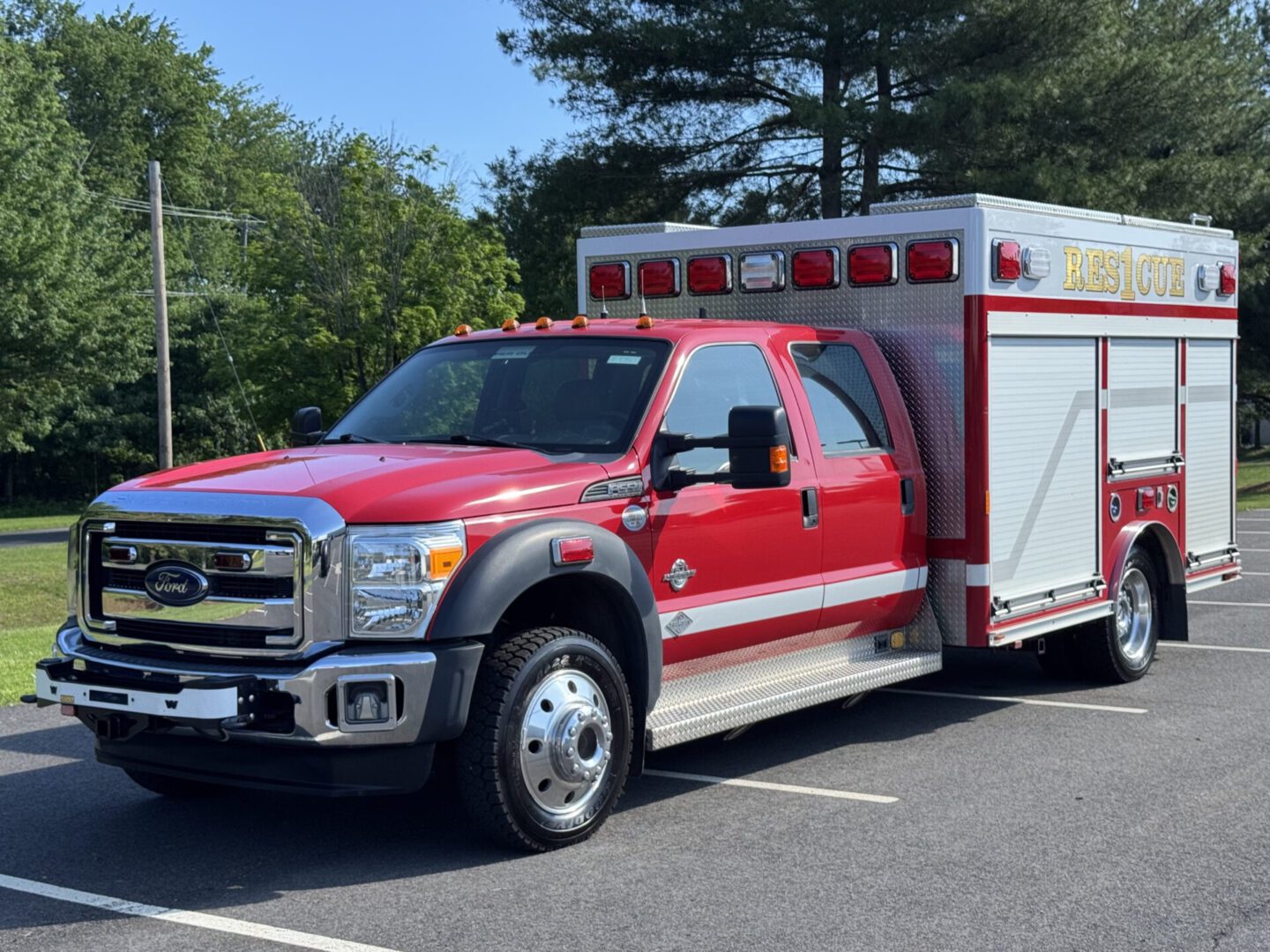
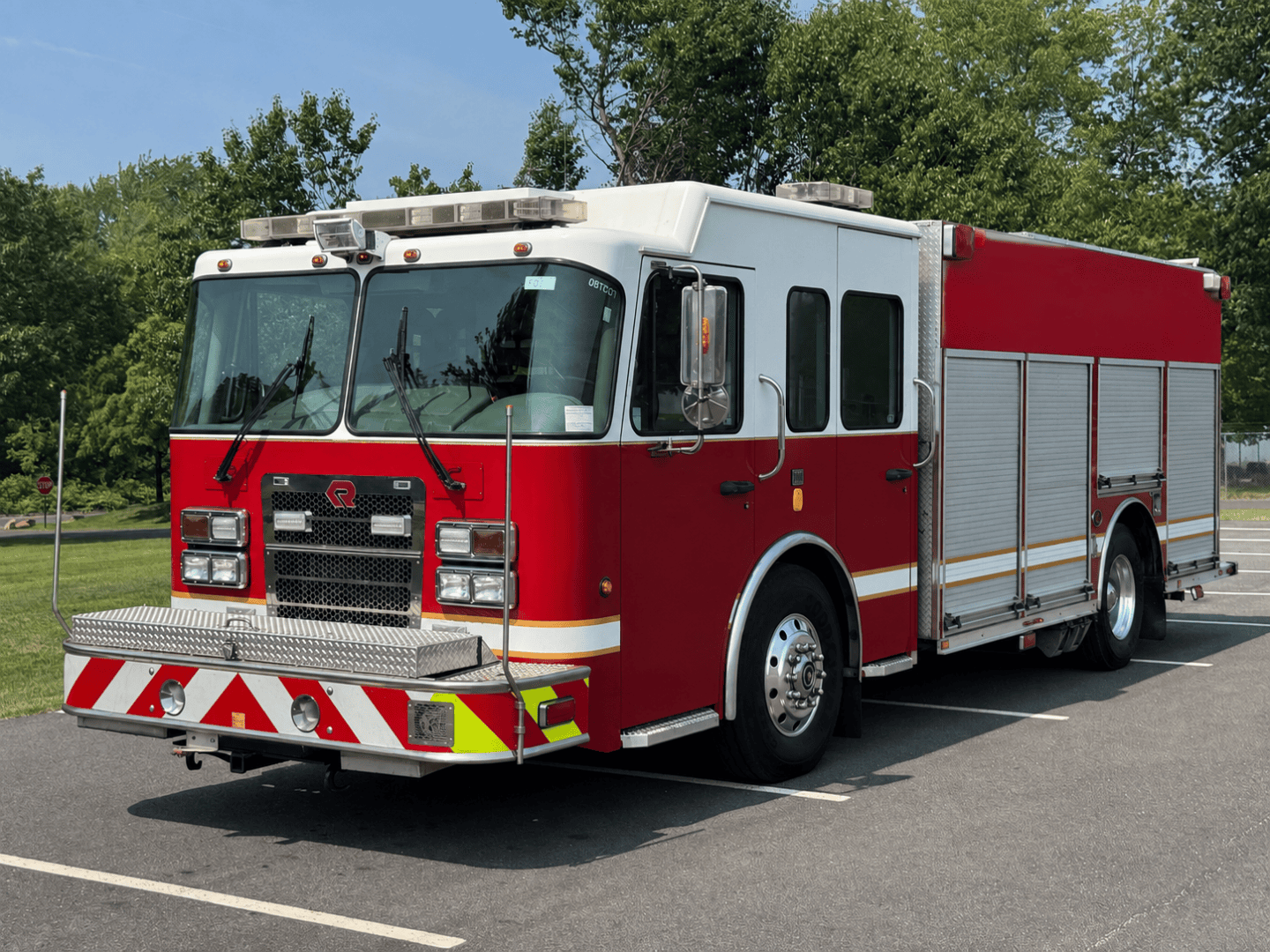
Hydraulic rescue tools ride on rescue apparatus: heavy rescues, rescue pumpers, and squads. The truck supplies what the tools can’t carry themselves, an onboard hydraulic reel or generator for power, deep compartments for the cutter, spreader, ram, cribbing, and airbags, and scene lighting to work by. The tool is only as ready as the truck that carries it.
Departments run these tools on a few different rigs:
- Heavy rescues carry the deepest tool load and the most onboard power, built for technical rescue and extrication as their main job.
- Rescue pumpers (wet rescues) carry water and a pump plus rescue tools, so one truck can fight fire and work a crash.
- Light rescues fit a department with a smaller tool load, usually on a commercial chassis.
At Fire Truck Center, in the founder’s own words: “We do have a dry chemical truck that’s available. Rescues, mostly the ones we have are non-walk-in, the walk-around style. We have both light and heavy rescues, both wet and dry.”
Every one of them clears a 150-point inspection before it’s listed, and on a wet rescue a third-party company pump-tests the pump to NFPA standards. Most ship with a 30-day satisfaction guarantee: return the truck within 30 days for any reason and get a full refund.
An inspected, service-ready used rescue runs from about $70,000 to $175,000, depending on size, configuration, age, and condition. That’s far below a new build with a multi-year factory wait. For ranges by apparatus type, see our used fire truck price guide, and before you commit to any used rig, our guide on what to check before you buy one walks the inspection in order. If you want one truck that pumps water and runs rescue tools, look at rescue pumpers.
Frequently Asked Questions
How much do the Jaws of Life cost?
A full set of hydraulic rescue tools is a five-figure purchase for most departments, and a single battery combi-tool costs less than a complete corded cutter, spreader, ram, and power-unit setup. Prices vary widely by brand, power source, and how many tools are in the set, so departments usually price a full kit through a dealer. The larger cost most departments face isn’t the tools, it’s the rescue truck that carries and powers them.
How much do hydraulic rescue tools weigh?
Most hand-carried cutters and spreaders are built to be portable, in a range one or two firefighters can handle and work with for an extended incident. Weight climbs with the biggest cutters and the heaviest-duty tools, and battery models add the weight of the onboard battery. Exact weight depends on the model, so check the manufacturer’s spec for the specific tool.
Can you buy the Jaws of Life, and do you need a rescue truck to use them?
You can buy hydraulic rescue tools, but they still need a power source, compartment space, and a trained crew to put them to work, which is what a rescue truck provides. The tools ride on a heavy rescue, rescue pumper, or squad that supplies onboard hydraulic power or a generator, secure storage, and scene lighting. Buying the tools is one decision; getting the apparatus to carry them is the other.
Who makes hydraulic rescue tools?
The main manufacturers of hydraulic rescue tools are Hurst (the original Jaws of Life), Holmatro, Genesis, Amkus, and Ogura. Each makes its own cutters, spreaders, rams, and combi-tools in both corded hydraulic and battery-powered versions. “Jaws of Life” is Hurst’s trademark, but crews often use the phrase for any brand’s tools.
Not sure what rescue rig fits the tools and the calls your department runs? Tell us your configuration, light or heavy, wet or dry, and we’ll help you find it, or build it. Every used truck we sell is inspected, pump-tested where it applies, and backed by a 30-day satisfaction guarantee. Browse our used rescue trucks or call (215) 559-9119.
Shopping for the truck that carries these tools? See what a heavy rescue truck costs in 2026, new versus used.
 CALL US NOW