

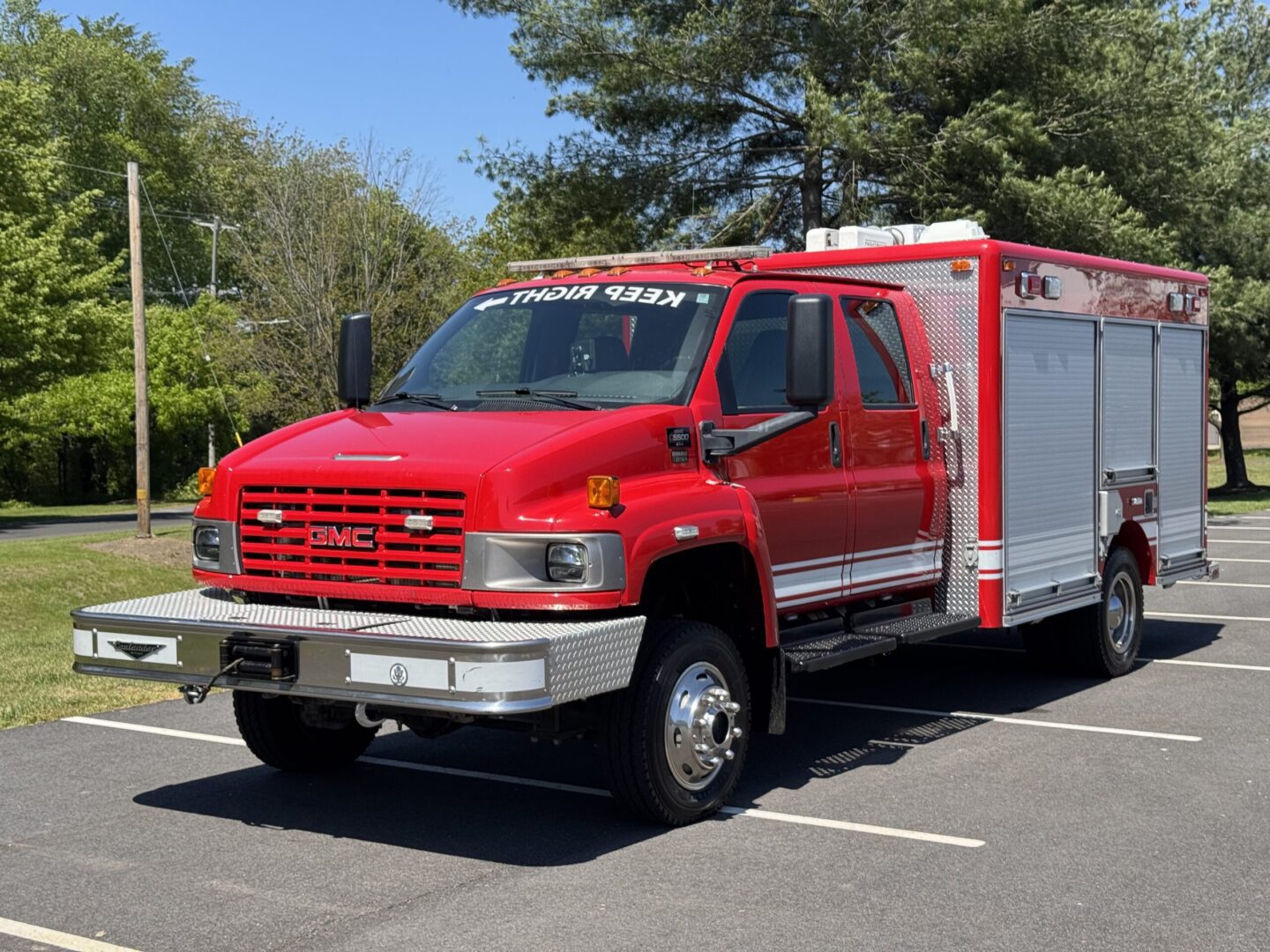
A heavy rescue truck is a fire apparatus built around compartment space, onboard power and scene lighting rather than water. It carries extrication tools, shoring, rope gear and air bags to crashes, collapses and confined-space calls. Most carry no pump and no water tank, so a heavy rescue supports fire attack rather than doing it.
Those words get stretched across four different trucks, which is where most of the confusion starts. Below is what separates a heavy rescue from an engine, a rescue-pumper and a light rescue, what a current one carries, what new and used ones cost, and how to pick the configuration your staffing can sustain. Every one of them turns up in the used rescue trucks we carry.
Key Takeaways
- A heavy rescue carries tools, power and lighting, not water. Most have no pump and no tank, which also means no annual pump test.
- A rescue-pumper, or wet rescue, adds a pump and a tank that usually starts around 500 gallons, so one rig covers fire attack and rescue with one crew.
- A new custom heavy rescue runs about $1.16 million and takes close to three years. South Bend, Indiana ordered in July 2023 and went in service on 27 May 2026.
- An inspected used rescue runs $70,000 to $175,000 and can be on your ramp in weeks.
- Staffing picks the configuration more than call volume does. A department that cannot crew two rigs should be looking at a rescue-pumper.
What is a heavy rescue truck?
A heavy rescue truck is a fire apparatus whose body is given over to compartments, generator capacity and scene lighting instead of a water tank. Its work is extrication, technical rescue, collapse, confined space and heavy tool work. A light rescue does the same job on a smaller commercial chassis with a smaller tool load.
One clarification before anything else. In the towing trade, “heavy rescue” means a wrecker that recovers overturned tractor-trailers. That is a different vehicle in a different industry. Everything on this page is fire service apparatus.
Inside the fire service the line that matters is water. If the truck also carries a pump and a tank it is a rescue-pumper, which the trade usually calls a wet rescue. A dry rescue carries tools only. Both are common, and departments pick between them on staffing more than anything else.
What does a modern heavy rescue truck carry?
Compartment space, onboard power and the tools to use both. The Mahwah (NJ) Fire Department put a 2026 Pierce non-walk-in rescue in service this month, and Fire Apparatus Magazine published the full spec on 25 September 2026. It is a fair benchmark for what a current heavy rescue is built to do.
- Cummins X12 525-hp engine with TAK-4 independent front suspension
- Harrison 25-kW PTO-driven generator
- Two electric cord reels and two tool air reels
- 26-inch front bumper extension carrying a tool box, plywood and lumber for shoring
- 48 feet of ground ladders
- A rear winch plus side receivers with winch power on both sides
- Onspot automatic tire chains and roll-up compartment doors
The generator is the number worth reading twice. Twenty-five kilowatts is what it takes to run electric and hydraulic extrication tools, cord reels and a full lighting package at the same time, and it is the component that most often decides whether an older rescue still has a future.
Worth noting: Mahwah is an all-volunteer department covering 26 square miles and about 25,000 residents. Its technical rescue unit is still a 2003 KME walk-in. A 23-year-old rescue body running alongside a brand-new one is normal in this business, and it tells you how much service life a well-kept rescue has left in it.
How much does a heavy rescue truck cost in 2026?
A new custom heavy rescue runs about $1.16 million. An inspected used rescue runs $70,000 to $175,000. The gap between a new build and a reconditioned used truck is the widest it has been in this category, and here is how the two compare as of September 2026.
| Option | Typical 2026 cost | Time to in-service |
|---|---|---|
| New custom heavy rescue | ~$1.16 million (South Bend, IN, 2026 Rosenbauer Commander) | About 3 years from order |
| Inspected used rescue, light to heavy | $70,000 – $175,000 | Weeks |
| Used rescue-pumper (wet) | Around $98,000 for a 2008 Spartan in our stock | Weeks |
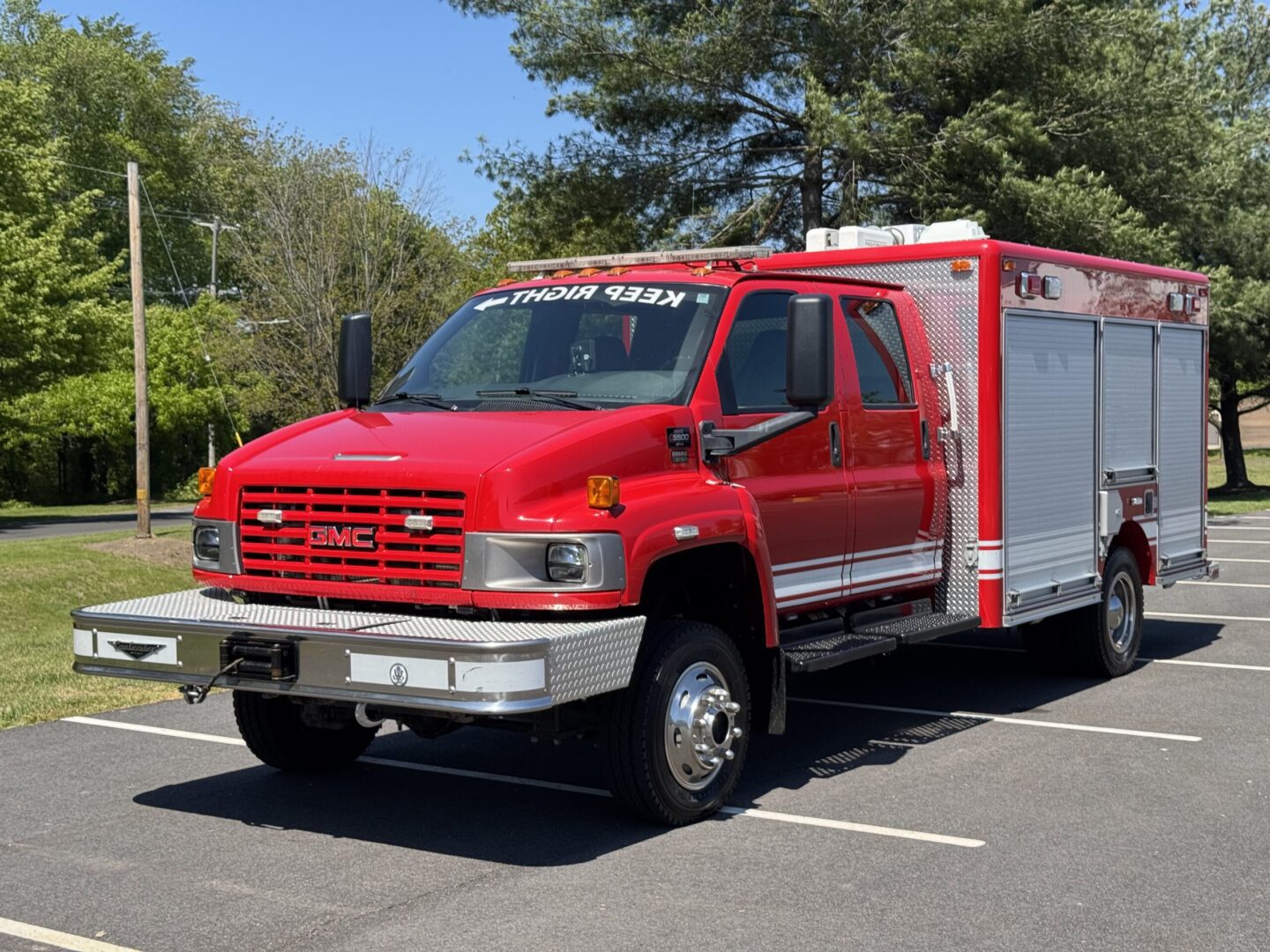
| Used 4×4 light rescue | Around $98,000 for a 27,000-mile 2009 GMC C5500 Pierce Contender in our stock | Weeks |
| Fire Truck Center new build (light rescue / brush) | From ~$129,000 | As little as 60 days |
Those used figures are our own published prices, not estimates. For the full range across pumpers, aerials, tankers and rescues, see our 2026 used fire truck price guide.
How long does a new heavy rescue truck take to build?
About three years. South Bend, Indiana is the cleanest recent example: the department placed the order in July 2023 and the rig went in service on 27 May 2026, replacing a unit that had run since 2007. That is roughly 34 months between signing and rolling.
Three years is a long time to keep a tired rescue in front-line service. It is also three years of price movement you cannot control, since most contracts are not locked against escalation for that long.
Need a rescue in service this quarter, not in 2029?
Our used rescues are inspected, reconditioned and ready to deliver in weeks. Light or heavy, wet or dry.
Heavy rescue, rescue-pumper or light rescue — which fits your department?
Start with how many firefighters you can put on the road, not how many calls you run. Staffing is what makes a configuration work or leaves it parked.
One truck, one crew, fire attack and rescue on the same response. You accept a smaller tool load and a pump to maintain, and you get a rig that is useful on every call rather than a fraction of them.
Deeper compartments, more onboard power, and no pump means no annual pump test to schedule or fail. Worth reading up on which NFPA standard governs testing on a used truck before you write the spec.
A commercial chassis carries most of what a volunteer department deploys, fits roads a heavy body cannot, and costs a fraction of one.
A dry heavy rescue that sits in the bay because nobody is left to staff it is the most expensive truck a department can own. Size the rig to the roster you have on a Tuesday at two in the morning, not the one on the roll sheet.
Walk-in or non-walk-in — which rescue body should you buy?
A walk-in rescue has an enclosed, stand-up interior where crews work inside the truck, out of the weather. A non-walk-in keeps everything in exterior compartments you reach from outside. Most of what we stock is non-walk-in, the walk-around style, and most departments we sell to prefer it.
The reason is simple. Exterior compartments put more tools within one step of the ground, and a walk-around body is easier to re-spec when your tool load changes. A walk-in earns its keep when crews need to work, treat or stage inside on long incidents.
What should you inspect on a used heavy rescue truck?
A dry rescue has no pump to fail a test, so buyers sometimes assume there is less to check. There is plenty. Work this list, in this order.
- Frame and body structure. Look for corrosion at the body-to-frame mounts and around compartment floors, where tool weight and road salt do their damage.
- Generator. Run it under real load, not at idle. Check hour meter, output, and whether the PTO or diesel unit has service records.
- Electrical and scene lighting. Every light, every switch, every reel. Rescue bodies carry more wiring than any other apparatus type.
- Compartment doors and hardware. Roll-up doors and shelving get hammered. Cycle all of them.
- Winches and receivers. Pull-test what the truck claims it can pull.
- Drivetrain. Engine, transmission, axles, brakes, suspension — the same checks a pumper gets.
- Miles against hours. Rescue rigs idle a lot at scenes. Our guideline is around 100,000 miles and about 10,000 hours as the outer limit.
- Paperwork. Service history, any refurbishment records, and where the truck actually came from.
Our founder put the risk plainly in his own words:
“There are a lot of unreliable sources, and sometimes you meet unscrupulous sellers just trying to unload apparatus that isn’t even worth putting back into service. Getting the vehicle inspected is the most important thing you can do.”
The longer version lives in our pre-purchase inspection walkthrough. Every rescue we list clears a 150-point inspection first — engine, transmission, axles, brakes, suspension, electrical, lighting package, scene lights and generator. When we find a fault, we fix it before the truck leaves. On a wet rescue, a third-party company pump-tests and certifies the pump to NFPA standards.
What if the budget will not reach a new heavy rescue?
Most departments that call us are not choosing between a used rescue and a new one. They are choosing between a used rescue and nothing. Four routes usually get them there.
- Buy inspected used now. $70,000 to $175,000, in service in weeks, with the 30-day satisfaction guarantee behind it.
- Finance it. Lenders who specialize in emergency vehicles handle a straightforward application. Our guide to municipal lease-purchase covers how the mechanism works.
- Apply for grant money, and keep running in the meantime. Federal and state programs rarely cover a seven-figure rig, but they comfortably cover a used one — see our apparatus grant breakdown.
- Have one built. We build our own light rescues and brush trucks on Ford, Ram or Chevy chassis from about $129,000, in as little as 60 days, with a 5-year Ford warranty and a 3-year warranty on the firefighting components. Details on our custom build page.
Right now we have a 2025 Ford F-550 4×4 light rescue in stock with 79 miles on it, built by us and ready to be spec’d to a department’s order.
Frequently asked questions
What is a heavy rescue fire truck?
A heavy rescue fire truck is an apparatus built around compartment space, onboard power and scene lighting rather than water. It carries extrication, shoring, rope and air-bag equipment to crashes, collapses and technical rescue calls, and most carry no pump and no water tank.
What does heavy rescue mean on a fire truck?
It means the truck is equipped for heavy tool work and technical rescue rather than fire attack. In the towing industry the same phrase means a wrecker that recovers tractor-trailers, which is a different vehicle entirely.
What is a heavy rescue fire truck used for?
Vehicle extrication, technical rescue, structural collapse, confined space and any call that needs heavy tools, shoring and a large power supply on scene. It supports the engine and ladder companies rather than replacing them.
What is the difference between a wet rescue and a dry rescue?
A wet rescue, also called a rescue-pumper, carries water and a pump and can fight fire. A dry rescue carries tools, power and lighting only. Fire Truck Center stocks both.
How much does a heavy rescue truck cost?
A new custom heavy rescue runs about $1.16 million with a wait of roughly three years. An inspected, service-ready used rescue runs about $70,000 to $175,000 depending on size, configuration, age and condition.
How many miles is too many on a used rescue truck?
Our working guideline is around 100,000 miles and about 10,000 engine hours. Rescue rigs idle heavily at scenes, so read the hour meter alongside the odometer, not instead of it.
Find a rescue that fits your department
Fire Truck Center has sold inspected used fire apparatus since 2015, with hundreds of trucks delivered across 49 states from our facility at 1991 Hartel Ave, Levittown, PA 19057. Every truck clears a 150-point inspection and carries a 30-day satisfaction guarantee. Financing, warranty plans, trade-ins and nationwide delivery are available.
Tell us the staffing you can field and the tools you have to carry, and we will tell you which configuration fits. Call (215) 559-9119 or browse the current inventory to see what is on the lot this week.
Sources

 CALL US NOW