

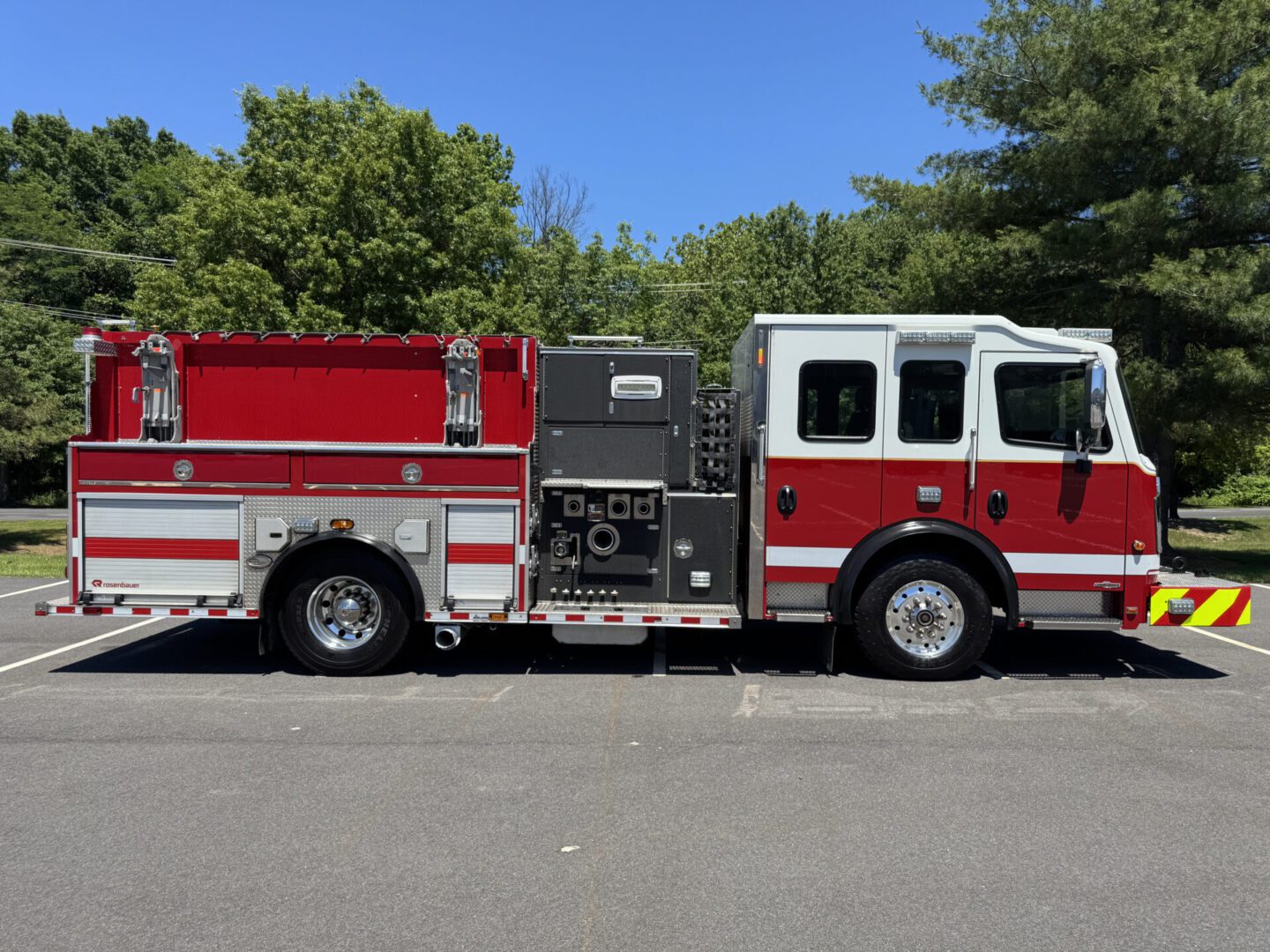
A used pumper is a fire engine with a mounted pump, a water tank and a hose bed, sold second-hand after a department replaces it. A service-ready one costs roughly $45,000 to $350,000, and most department-ready engines land between $75,000 and $275,000. The pump, the frame and the paperwork decide whether it is a good buy. The odometer doesn’t.
That last point is where most purchases go wrong. A 1996 Pierce with 22,000 miles and a 2013 Rosenbauer with 81,430 miles are both sitting in the used pumpers and engines we currently have in stock, and the older truck isn’t the worse buy. What separates them is how they were cared for, what the pump does under test, and whether anyone can prove it.
Key Takeaways
- A service-ready used pumper runs about $45,000 to $350,000. Units over 20 years old often sell in the $20,000 to $40,000 range, and $145,000 to $150,000 buys a mid-2000s to 2010 custom engine.
- Corrosion is the most common reason to walk away from a used pumper, ahead of mileage, age and hours.
- “Pump tested” is not a certificate. Ask who performed the test, on what date, and against which standard. NFPA 1910 is the standard that governs testing on an in-service truck.
- Fire Truck Center’s own purchase ceiling is around 100,000 miles and 10,000 engine hours, and plenty of good 10-to-20-year-old reserve pumpers sit near 10,000 miles.
- Most used pumpers need some pump service, from several hundred dollars to several thousand. That is normal, not a red flag — an undocumented truck is the red flag.
What does a used pumper cost in 2026?
A service-ready used pumper costs about $45,000 to $350,000 or more, with most department-ready engines between $75,000 and $275,000. Units over 20 years old often sell in the $20,000 to $40,000 range. For comparison, a new pumper quote runs $500,000 to $900,000 with a two-to-four-year build queue.
Age sets the band. Within a band, the pump rating, the tank size, the chassis and the condition of the body set the number. Here is what the bands buy, using engines currently on our lot.
| Price band | What it buys | Available example |
|---|---|---|
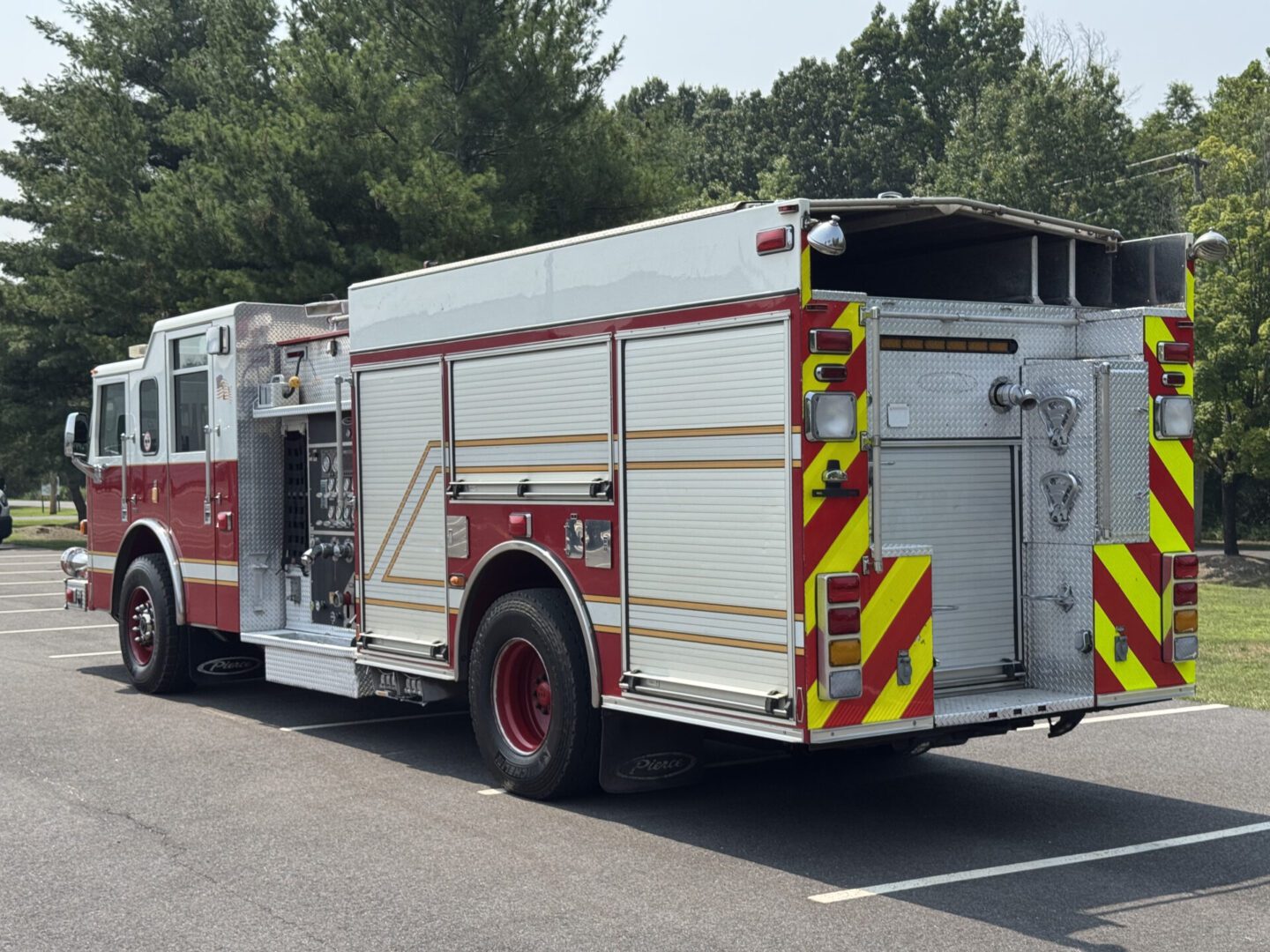
| $20,000 – $49,000 | A 20-to-30-year-old engine, usually 1,250 GPM, often with very low mileage. Expect to spend on refurbishment. | 1996 Pierce Saber, 1,250 GPM, 22,000 miles — $49,000 |
| $95,000 – $100,000 | Late-2000s commercial-chassis engines, rescue pumpers and 4×4 mini pumpers. | 2008 Spartan rescue pumper, 1,200 GPM, 85,467 miles — $98,000 |
| $145,000 – $150,000 | Mid-2000s to 2010 custom or commercial pumpers, 1,250 to 2,000 GPM. | 2007 Pierce Dash, 2,000 GPM, 45,500 miles — $149,000 |
| $200,000 – $250,000 | Early-2010s custom pumpers on a custom cab, typically 1,500 GPM. | 2013 Rosenbauer on a Spartan chassis, 1,500 GPM, 81,430 miles — $225,000 |
| $275,000 – $350,000+ | Late-2010s custom pumpers, 1,500 GPM, larger tanks, low hours for the year. | 2017 Rosenbauer Commander, 1,500 GPM, 750-gallon tank, 78,731 miles — $295,000 |
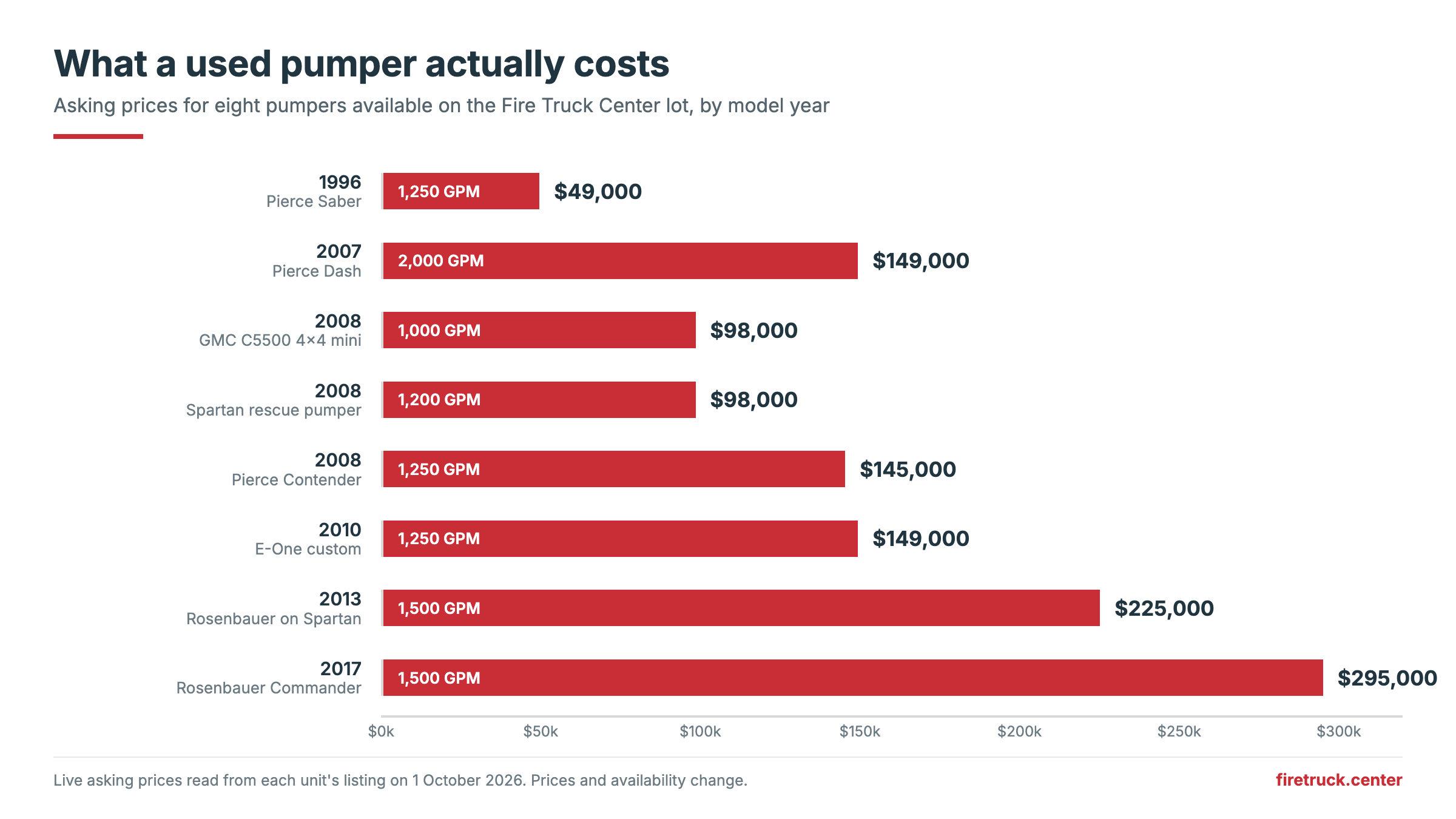
Prices and availability move, so treat the examples as a reference for the shape of the market rather than a standing quote. Our 2026 used fire truck price guide covers the other apparatus types the same way.
What should you check first on a used pumper?
Check structural condition first: the frame, then corrosion, then the pump for leaks and vacuum, then the drivetrain and electrical. Mileage comes last. A truck with a sound frame and a bad pump is a repair; a truck with a corroded frame is somebody else’s problem.
Our founder is blunt about where the line sits:
“Corrosion is usually the biggest dealbreaker for us. If a truck has major rust or significant corrosion, we simply won’t touch it.”
That’s a buy-side rule, applied before Fire Truck Center purchases a truck for inventory, and it’s worth borrowing. Corrosion is the one finding that is expensive everywhere it appears and impossible to see from a listing photograph.
The order we work in on a pumper:
Solid, straight, no repairs hiding under paint.
Where the truck lived matters. Engines out of small southern towns carry far less of it than units that spent fifteen winters on salted northern roads.
Leaks, vacuum, valve condition. The pump is the reason the truck exists.
Engine leaks and performance, transmission, axles, brakes, suspension.
Lighting package, sirens, the warning system as a whole.
Read last, and read as a pair — see below.
Every truck we sell goes through a 150-point inspection that follows this order, and we inspect before we buy rather than after. If you’re walking a truck yourself, our guide on how to walk a truck end to end before you commit covers the same ground in checklist form.
Looking at used pumpers right now?
Every engine on our lot is refurbished, 150-point inspected and third-party pump tested before it leaves. Prices, pump ratings and mileage are published on each listing.
What does a pump test certificate actually have to say?
A pump test certificate is only worth something if it names the company that performed the test, the date it was performed, and the standard it was run against. A seller telling you a truck was “pump tested” is a claim, not a document.
NFPA 1910 is the standard that covers testing, inspection, maintenance and refurbishment of apparatus already in service, and its pump performance testing sits in Chapter 22 as an annual service test. It absorbed NFPA 1911, which is the number many departments still use for the same thing. If a certificate cites 1911, that isn’t wrong — it means the test predates the consolidation.
Three questions settle whether a certificate means anything:
- Who ran it? A third-party testing company, not the seller’s own shop. Independent firms sell exactly this service, and a full test on a large apparatus can take most of a day.
- When? The test is annual. A certificate from four years ago tells you about a truck that no longer exists.
- Against what? NFPA 1910, the standard that governs in-service apparatus testing, or NFPA 1911 for older paperwork.
Fire Truck Center has third-party pump tests performed on applicable trucks before delivery, and aerial certifications on units that carry a ladder. The reason isn’t paperwork for its own sake: a certificate from an outside firm is the only part of a condition claim a buyer can independently check.
How many miles and hours are too many on a used pumper?
Our purchase ceiling is roughly 100,000 miles and about 10,000 engine hours, and we buy as far under both as the market allows. But the more useful reading is the relationship between the two numbers, not either one alone.
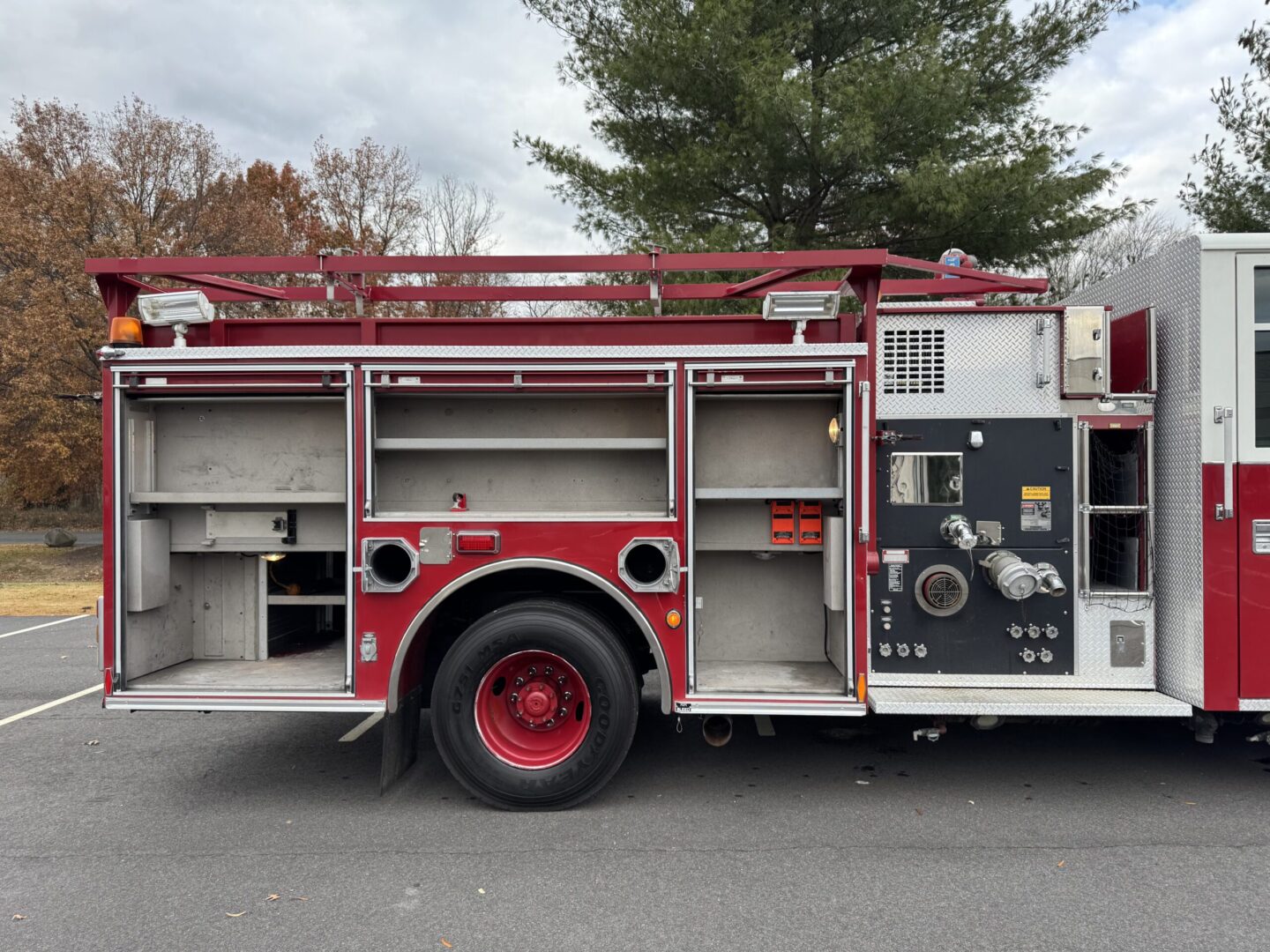
Work the ratio. A 2008 Pierce Contender on our lot shows 52,567 miles against 5,128 engine hours — about ten miles for every hour the engine ran. That’s what ordinary municipal response work looks like: short runs, long idles on scene. A truck showing 90,000 miles against 2,000 hours, or 15,000 miles against 9,000 hours, is telling you something the listing is not.
Our founder on what that gap usually means:
“We pay close attention to the relationship between engine hours and mileage. If the numbers look unusual, that’s a reason to investigate further. Sometimes it can indicate that the odometer has been replaced, but it can also reflect how the department used the truck. That’s why it’s very important to check the vehicle’s history and verify that the mileage is accurate.”
High age with low mileage is common on this market and is usually good news. Reserve engines at small departments can be ten to twenty years old and still show around 10,000 miles, because they rarely left the bay. Those trucks can be visually like new. We cover how to weigh engine hours against mileage on a used fire truck in more depth, including what a pump-hour meter adds to the picture.
Which pump and tank size fits your department?
Standard fire pumps run from 1,250 GPM up to about 2,000 GPM, and a rescue pumper’s tank starts around 500 gallons. The right combination comes from your ISO requirements and your water supply, not from buying the largest pump on the lot. Departments either size to their Public Protection Classification requirements or work it out from their own response area.
What the market actually offers:
| Configuration | Where it shows up | What to weigh |
|---|---|---|
| 1,000 – 1,200 GPM, 200 – 500 gal | Mini pumpers, 4×4 pump-and-roll units, light rescue pumpers | Narrow access, driveway and wildland-urban work. A 2008 GMC C5500 4×4 mini pumper at 1,000 GPM carries a 200-gallon tank. |
| 1,250 GPM, 500 – 750 gal | The most common used engine on the market | The baseline standard pump. Suits hydranted districts and most suburban first-out engines. |
| 1,500 GPM, 750 – 1,000 gal | Early-2010s and newer custom pumpers | More pump than many districts draft for, but the standard spec on newer custom engines, so it is what the late-model supply looks like. |
| 2,000 GPM, 500 – 750 gal | Top of the standard range, often on older custom chassis | Worth it where you have the supply to feed it. A 2007 Pierce Dash at 2,000 GPM lists under $150,000. |
Two things buyers get backwards here. A bigger pump is only useful if your hydrant or tender supply can feed it, so a 2,000 GPM pump on a rural draft operation is paying for capacity you can’t reach. And tank size isn’t a substitute for water supply — a 1,000-gallon tank buys you a few minutes, not a strategy. Tankers and tenders, which run to 3,000 gallons and beyond, are a separate apparatus class.
Pumps on this market are mostly Hale and Waterous. We are a dealer for both, which means parts and service questions have an answer rather than a search.
What does “refurbished” mean on a used pumper, and what paperwork should come with it?
Refurbished should mean reconditioning work was performed and documented. A washed and waxed truck with fresh decals isn’t refurbished, and the difference is worth several tens of thousands of dollars.
Our founder draws the line this way:
“To us, refurbished means that significant reconditioning work has been done to the vehicle. That’s actually what we do in most cases, because almost every truck that comes in needs some kind of service or repair work. I don’t think we’ve ever had a truck that we simply cleaned up and resold without performing the necessary service work.”
Pump work is the usual item, and it is not a warning sign:
“Most used trucks need some kind of pump service. It might be repacking the pump, repairing leaking valves or taking care of other maintenance issues. The cost can vary quite a bit, anywhere from several hundred dollars to many thousands.”
NFPA 1910 also defines refurbishment formally, in two levels, so a refurb contract can be written against a standard rather than a conversation. Ask which level applies before you accept the word.
Paperwork to ask for before money moves:
- The most recent pump test certificate, with the testing company and date on it.
- Maintenance records from the selling department, not a summary of them.
- A written list of the work performed by the seller, item by item.
- The title, clean and in the seller’s name.
- The build standard the truck was made to. A pumper contracted before 1 January 2024 was built to NFPA 1901; NFPA 1900 applies only to apparatus contracted new from that date forward. A used truck is never “out of compliance” with NFPA 1900.
If a seller cannot produce the first three, the price should reflect that you are buying an unknown.
Where should you buy a used pumper, and what should the seller guarantee?
Buy from a seller who inspected the truck before they bought it themselves, who can produce third-party test documentation, and who will take the truck back if it isn’t what they said. Price is the easy part of this decision; those three are the hard part.
Most of the market is listings. Search for a used pumper and you get a dozen inventory grids — filtered by brand, sorted by year, with a phone number. None of them tells you what the truck has been through. That gap is where departments get hurt, and our founder has watched it happen:
“Not checking it very carefully. There are a lot of unreliable sources, and sometimes you meet unscrupulous sellers just trying to unload apparatus that isn’t even worth putting back into service. Getting the vehicle inspected is the most important thing you can do.”
What Fire Truck Center puts behind a truck:
- Inspection before purchase. We inspect a unit before we buy it for inventory, specifically so we are not reselling a lemon.
- Sourcing on purpose. We buy well-cared-for, low-corrosion trucks, most often from small southern towns.
- A 150-point inspection with third-party NFPA pump tests, and aerial certifications where a ladder is involved.
- A 30-day satisfaction guarantee. A full refund within 30 days for any reason. We pay the return freight. The truck comes back in the same condition it left in, and there’s no mileage cap.
- In service in weeks, not years. We’ve had a department take delivery about a week after the call, when the truck was already inspected and the funding was approved. The approval process is usually the long pole, not the truck.
Thirty days is enough time to put an engine through a shift, draft from a pond, pull every valve and have your own mechanic underneath it. That’s the point of the window.
Frequently asked questions
How much does a used fire pumper cost?
Expect roughly $45,000 to $350,000 for a service-ready used pumper, with most department-ready engines between $75,000 and $275,000. Units over 20 years old often sell in the $20,000 to $40,000 range — a 1996 Pierce Saber with 22,000 miles currently lists at $49,000.
What is the difference between a pumper and a fire engine?
They are the same apparatus. A pumper is named for what it does: it carries a mounted pump, a water tank and a hose bed. Most departments call that truck an engine once it is in service, and a dealer listing may use either word.
How many miles is too many for a used fire truck?
Fire Truck Center’s own purchase ceiling is around 100,000 miles and 10,000 engine hours. Many 10-to-20-year-old reserve pumpers from small departments sit near 10,000 miles, so high age with low mileage is common and not a problem by itself.
Does a used pumper have to meet NFPA 1900?
No. NFPA 1900 applies to apparatus contracted new on or after 1 January 2024. A used pumper was built to the standard in force when it was ordered, usually NFPA 1901, and what governs it now is NFPA 1910, which covers in-service inspection, testing, maintenance and refurbishment.
Do you need a pump test before putting a used pumper in service?
Yes, and you want one performed by a third party against the current NFPA testing procedure, with the date and the testing company named on the certificate. Ask for the most recent one before you buy rather than after.
What is a mini pumper, and who buys one?
A mini pumper is a smaller pump-and-tank unit built on a commercial chassis, usually with a pump around 1,000 GPM and a tank in the 200-to-500-gallon range. Departments buy them for narrow access, driveway fires and wildland-urban interface work, usually alongside a full-size engine rather than instead of one.
Talk to us about the pumper you are looking at
Fire Truck Center has been selling quality-tested used fire apparatus since 2015, and has delivered hundreds of trucks to departments in about 49 states. We inspect every unit before we buy it, run a 150-point inspection before it leaves, and back it with a 30-day satisfaction guarantee.
If you are working through a used pumper purchase and want a second read on a specific truck — ours or somebody else’s — call us at (215) 559-9119 or email help@firetruck.center. We’ll tell you what we would check and what we would walk away from.
Sources
- NFPA — NFPA 1910 Standard Development (2024 edition)
- NFPA — NFPA 1900 Standard Development (2024 edition)
- NFPA — NFPA 1901 Standard Development (2016 edition, last stand-alone)
- NFPA — NFPA 1911 Standard Development (2017 edition, last stand-alone)
- FAMA — NFPA 1900: What’s New and Why (18 December 2023)
- UL Solutions — Fire Department Pump Performance Testing Services
- Verisk / ISO — Public Protection Classification (PPC) Program
- Hale Products — fire pumps
- Waterous — fire pumps
- Fire Truck Center — 1996 Pierce Saber pumper listing
- Fire Truck Center — 2008 Pierce Contender pumper listing
- Fire Truck Center — 2017 Rosenbauer Commander pumper listing

 CALL US NOW