


A commercial driver’s license is required to drive a fire truck in most cases, because nearly every pumper, aerial and tanker is rated above 26,001 pounds. Federal rules let each state waive that for firefighters operating emergency equipment, but the waiver is narrow, it’s optional, and it usually doesn’t cover driving a truck you just bought.
Key Takeaways
- A fire truck over 26,001 pounds GVWR is a commercial motor vehicle under federal law. Buying one does not change that.
- The firefighter exemption is a waiver each state may adopt. FMCSA’s own guidance says the answer is yes, a CDL is required, unless your state has waived it.
- The federal waiver carries four conditions, and the vehicle has to be responding to an emergency rather than driving in normal traffic.
- The waiver stops at your state line unless an adjoining state has a reciprocity agreement.
- Pennsylvania, California, South Carolina and Wisconsin handle this four different ways. Check your own state before anyone turns a key.
Do you need a CDL to drive a fire truck?
In most cases, yes. The federal rule that decides it is weight, not purpose: a single vehicle with a gross vehicle weight rating of 26,001 pounds or more is a Group B commercial motor vehicle, which puts it in Class B CDL territory. Fire apparatus clears that line comfortably.
The exception people repeat is real, but it’s smaller than its reputation. States are allowed to waive CDL requirements for firefighters operating emergency equipment. They aren’t required to, and several haven’t.
The Federal Motor Carrier Safety Administration answers this directly in its published guidance. Asked whether state, county and municipal workers operating commercial motor vehicles have to get CDLs, FMCSA’s answer is: yes, unless they are waived by the state under the firefighting and emergency equipment exemption.
That’s the whole shape of the answer. The default is a CDL. The waiver is the exception, it belongs to your state rather than to you, and it comes with conditions attached.
What makes a fire truck a commercial motor vehicle?
Weight. Federal regulation 49 CFR 383.5 defines a Heavy Straight Vehicle, Group B, as one having a gross vehicle weight rating or gross vehicle weight of 26,001 pounds or more.
A typical engine runs somewhere between 30,000 and 46,000 pounds depending on tank size, pump and aerial. Most units you can browse in our used fire truck inventory list a GVWR on the spec sheet. If you are shopping, what a fire truck weighs loaded is worth reading before you plan the drive home.
One correction worth making, because it shows up on page one of this search: fire trucks are commercial motor vehicles. Some articles say the opposite, usually as a shorthand for “firefighters don’t need a CDL.” The vehicle’s classification doesn’t change when a state grants a waiver. What changes is whether a particular driver, in particular circumstances, needs a CDL to operate it. That distinction is why the waiver’s conditions matter so much.
Three things follow from the weight test:
- A pumper, aerial, heavy rescue or tanker is almost always Group B.
- A brush truck on a Ford F-550 chassis usually isn’t. Lighter apparatus can fall under the threshold entirely.
- GVWR is the rating on the door jamb plate, not what the truck weighs today. An empty tank doesn’t move you below the line.
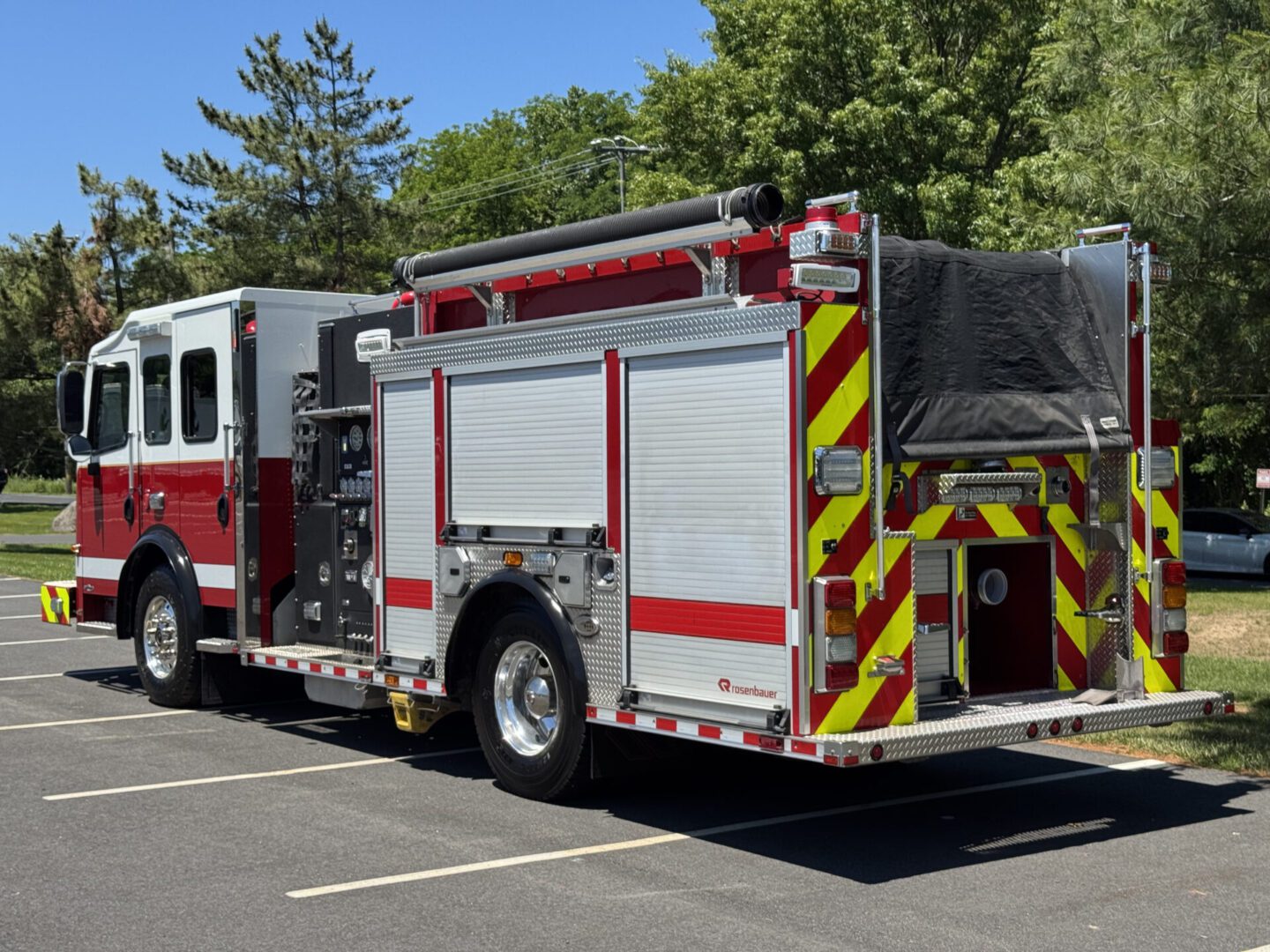
Check the plate on any unit you’re considering. It’s one of the first things we read on a truck. The federal licensing rules themselves live with FMCSA.
What does the federal firefighter exemption actually say?
The federal firefighter exemption is a state option, not an automatic federal pass. The text of 49 CFR 383.3(d) opens with the words “A State may, at its discretion, exempt” — and then adds that the use of this waiver is limited to the driver’s home state unless there is a reciprocity agreement with adjoining states.
Paragraph (d)(2) describes who and what it covers: firefighters and other persons who operate commercial motor vehicles which are necessary to the preservation of life or property or the execution of emergency governmental functions, are equipped with audible and visual signals, and are not subject to normal traffic regulation. The regulation lists fire trucks, hook and ladder trucks, foam or water transport trucks, police SWAT team vehicles, ambulances and other vehicles used in response to emergencies.
Read as conditions, that is four separate tests the operation has to meet:
- The driver is a firefighter or other emergency operator.
- The vehicle is necessary to the preservation of life or property, or to the execution of emergency governmental functions.
- The vehicle is equipped with audible and visual signals.
- The vehicle is not subject to normal traffic regulation.
Plus the geographic limit: home state only, unless an adjoining state has agreed to honor it.
Conditions two and four are the ones that decide most real situations. Together they describe a truck running a call with lights and siren, operating outside ordinary traffic rules because an emergency allows it. That’s what the waiver was written for.
Does the exemption cover driving home a fire truck you just bought?
Almost certainly not, and this is the question most buyers came here to ask. Take a delivery drive through the four conditions and it fails at least two of them before you reach the state line.
- Preservation of life or property? No. Collecting a vehicle you purchased is a logistics trip.
- Audible and visual signals? The truck may have them. You won’t be using them.
- Not subject to normal traffic regulation? You’re entirely subject to normal traffic regulation. You’re driving in traffic, obeying signals, the same as any other vehicle on the road.
- Home state only? A truck bought three states away leaves the waiver behind at the first border it crosses.
There is a second problem that catches people even inside their own state: several state waivers attach to the truck’s ownership, not just the driver’s role. Pennsylvania’s statute requires that the vehicle be registered to the fire department or municipality. California defines firefighting equipment as a vehicle owned, leased, rented by, or under the exclusive control of a fire agency. A truck still titled to a dealer, or freshly titled to a department that has not registered it yet, satisfies neither description.
So the practical answer for a buyer is to assume a CDL applies to the drive, and to plan around it rather than around the exemption.
This article quotes regulations. It isn’t legal advice. Licensing is decided by your state, the specifics turn on your own facts, and penalties fall on the driver. Confirm with your state licensing agency, and with your department’s solicitor or insurer, before anyone moves the truck.
How do different states handle the firefighter CDL exemption?
Four different ways, as these four states show. Each one was written from the state’s own statute or licensing agency.
| State | Does it waive the CDL? | What the state actually requires |
|---|---|---|
| Pennsylvania | Yes, with conditions | A volunteer or paid firefighter holding a Class C license and a certificate of authorization from the fire chief, operating a fire or emergency vehicle registered to the fire department or municipality |
| California | No | No blanket waiver. A Class A or B CDL, or a Class C with the “F” firefighter endorsement — which takes proof of employment or volunteer registration, fire apparatus driver training, a written test and a health questionnaire |
| South Carolina | Not a CDL, but not an ordinary license either | A Class E or F driver’s license to drive a fire truck |
| Wisconsin | Yes, and more broadly than most | Membership in a volunteer or paid fire organization, operating fire equipment with siren and warning lamps, in the routine performance of fire organization duties, responding to a call, or returning from one |
The spread matters more than any single row. “Firefighters are exempt” is false in California, conditional in Pennsylvania, and in South Carolina the answer is a different license class rather than an exemption. Wisconsin is the most generous of the four and still requires you to be a member of the fire organization operating fire equipment.
Every one of the four hangs the waiver on a relationship between the driver, the fire organization and the vehicle. A buyer collecting a truck typically has none of the three in place yet.
These are four states out of fifty. Confirm your own with your state licensing agency rather than reasoning by analogy from a neighbor.
One detail worth flagging for anyone building a training file: California’s endorsement rule cites NFPA 1002 as the training benchmark, and NFPA 1002 doesn’t exist as a stand-alone standard any more. It was folded into NFPA 1010, Standard on Professional Qualifications for Firefighters, in the 2024 edition. The last stand-alone edition of 1002 was 2017. This is the same renumbering that hit the apparatus standards, covered in our piece on the NFPA standard renumbering.
Do tankers and aerials need extra endorsements?
Tankers often do, and it is the question buyers miss most. Federal regulation 49 CFR 383.5 defines a tank vehicle as a commercial motor vehicle designed to transport liquid or gaseous materials in a tank with an individual rated capacity of more than 119 gallons and an aggregate rated capacity of 1,000 gallons or more. A water tender carrying 1,500 or 3,000 gallons is comfortably inside that definition.
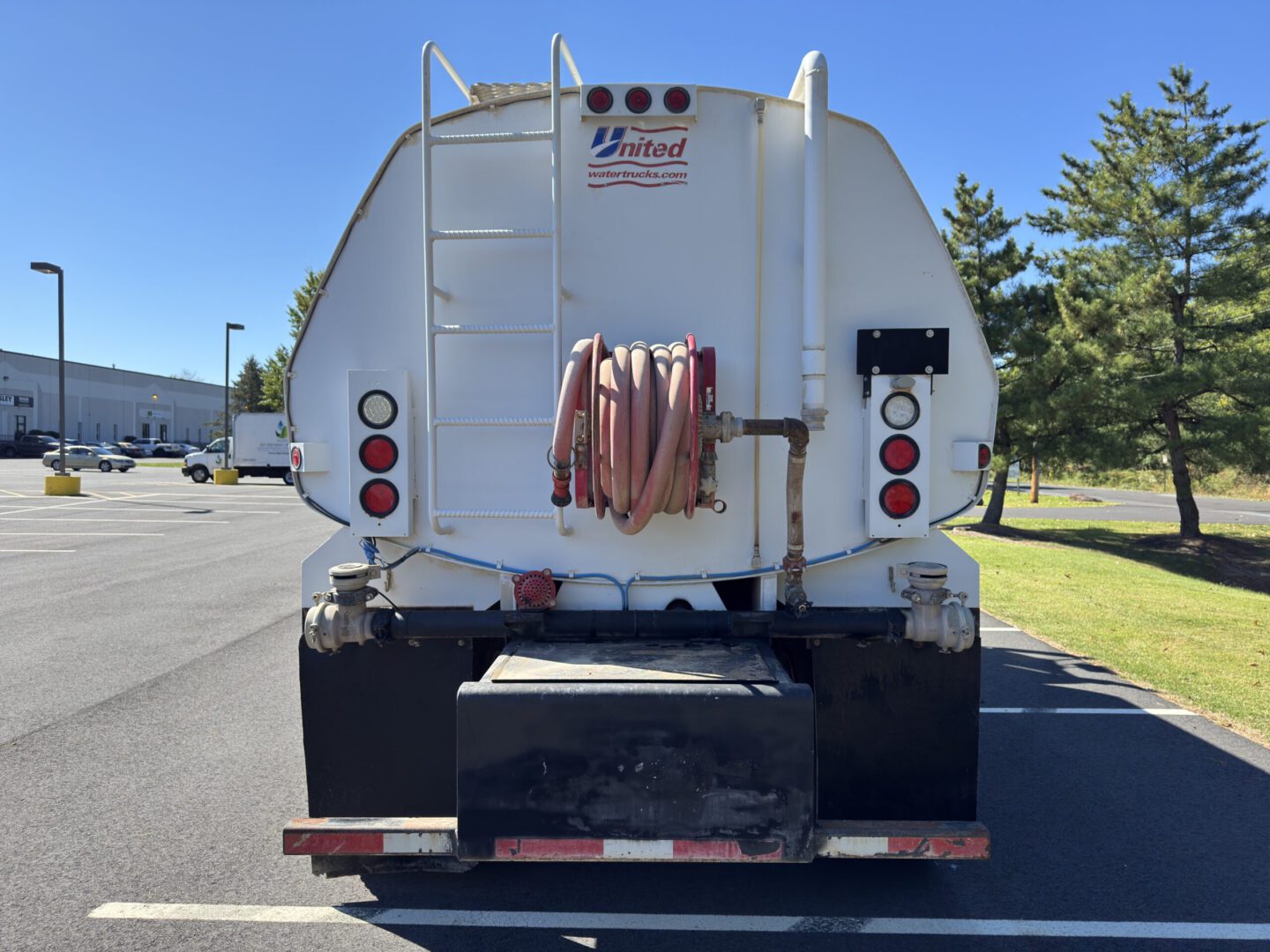
California’s Highway Patrol policy manual spells out the consequence: a tank endorsement is required in addition to the firefighter endorsement when operating a tank vehicle. The firefighter provisions and the endorsement requirements are separate systems, and clearing one does not clear the other. If you’re shopping used tankers and water tenders, ask the question early.
Two more that catch drivers out:
- Air brakes. Under 49 CFR 383.95, an applicant who fails the air brake knowledge component, or who takes the skills test in a vehicle without air brakes, gets a license restricted from operating any commercial motor vehicle with air brakes. Fire apparatus runs air brakes. A Class B earned in a truck without them doesn’t cover the engine.
- Tillers. California requires the firefighter endorsement for tiller operators specifically. A tractor-drawn aerial is its own skill and several states treat it that way.
What if nobody on your roster is licensed to drive it?
You have four workable options, and the first one removes the problem rather than solving it.
- Have the seller deliver it. This is the normal path, and the reason most departments never face the question. A dealer that delivers handles the driver, the licensing and the liability for the trip.
- Hire a transport company. A drive-away service or a flatbed carrier moves the truck under its own operating authority. Reasonable for a long haul, and the only realistic option if the unit is not road-ready.
- License a driver before delivery. If a member is going to get a Class B anyway, start it well ahead of the purchase. Take the skills test in a vehicle with air brakes so the restriction doesn’t follow the license.
- Time delivery around your training. If your state waives the CDL only once the truck is registered to the department, the sequence matters: register, train, then drive.
Whichever route you take, inspect the truck before it moves. Our walkthrough on how to inspect a used fire truck before taking delivery covers what to look at and in what order.
Frequently asked questions
Can a volunteer firefighter drive a fire truck without a CDL?
It depends entirely on the state, and in some states the answer is no. Federal rules let a state waive CDL requirements for firefighters operating emergency equipment, but the state has to have adopted that waiver and the operation has to meet its conditions. Pennsylvania requires a Class C license plus a certificate of authorization from the fire chief. California has no blanket waiver and requires an “F” firefighter endorsement instead.
What class of CDL do you need for a fire truck?
Class B, in most cases. A single vehicle with a gross vehicle weight rating of 26,001 pounds or more is a Group B commercial motor vehicle under 49 CFR 383.5, which corresponds to a Class B CDL. A Class A applies if you are towing a trailer rated over 10,000 pounds. Tankers may also require a tank endorsement, and the license must not carry an air brake restriction.
Do you need a CDL to drive a fire truck you bought at auction?
Assume yes. The federal firefighter waiver covers vehicles necessary to the preservation of life or property that are equipped with audible and visual signals and are not subject to normal traffic regulation. A drive home from an auction is subject to normal traffic regulation and is not an emergency response, so the waiver does not reach it. Several state waivers also require the vehicle to be registered to a fire department, which a freshly purchased truck is not.
Does a fire truck need a tank endorsement?
A water tender usually falls inside the federal tank vehicle definition, so the endorsement question is live. Under 49 CFR 383.5 a tank vehicle carries a tank with an individual rated capacity above 119 gallons and an aggregate capacity of 1,000 gallons or more. California’s Highway Patrol manual states that the tank endorsement is required in addition to the firefighter endorsement for tank vehicles. Confirm the rule with your own state.
Can you drive a fire truck home across state lines on a firefighter exemption?
No. The text of 49 CFR 383.3(d) limits the use of the waiver to the driver’s home state unless there is a reciprocity agreement with adjoining states. A multi-state drive leaves the waiver behind at the first border, and that is before the operation has to satisfy the emergency-response conditions it never meets on a delivery trip.
Do you need a CDL to drive a brush truck?
Often not, because weight decides it. The CDL threshold is a gross vehicle weight rating of 26,001 pounds, and a brush truck built on a Ford F-550 or similar chassis usually sits below it. Read the GVWR on the door jamb plate rather than estimating from the truck’s size, and check whether your state applies a lower threshold of its own.
Talk to us about getting the truck to your station
Fire Truck Center has been selling reconditioned used fire apparatus since 2015, and we have delivered hundreds of trucks to roughly 49 states. Every unit goes through a 150-point inspection, with third-party NFPA pump tests and aerial certifications where they apply, before it leaves the lot. Delivery is part of what we do, which is why the licensing question rarely becomes the buyer’s problem.
If you’re working out who can legally move a truck you’re considering, call us at (215) 559-9119 or email help@firetruck.center. We will tell you the unit’s GVWR, what it would take to get it to your station, and what delivery would cost.
Sources
- eCFR — 49 CFR 383.3, Applicability (current)
- eCFR — 49 CFR 383.5, Definitions (current)
- eCFR — 49 CFR 383.95, Restrictions (current)
- FMCSA — Commercial Driver’s License Program (current)
- FMCSA — Are State, county and municipal workers operating CMVs required to obtain CDLs? (March 2019)
- Pennsylvania General Assembly — 75 Pa.C.S. § 1606, Requirement for commercial driver’s license (current)
- PennDOT — Commercial Driver’s License FAQs (2025)
- California DMV — Firefighter Endorsement Training Requirements (2026)
- California Highway Patrol — Highway Patrol Manual 82.6, Chapter 7, Driver Licensing (current)
- South Carolina DMV — Fire Truck (current)
- Wisconsin Legislature — Wis. Stat. § 343.055, Waiver of commercial driver license requirements (current)
- NFPA — NFPA 1010, Standard on Professional Qualifications for Firefighters (2024 edition)
- NFPA — NFPA 1002, Fire Apparatus Driver/Operator Professional Qualifications, Standard Development (consolidated into NFPA 1010)

 CALL US NOW