

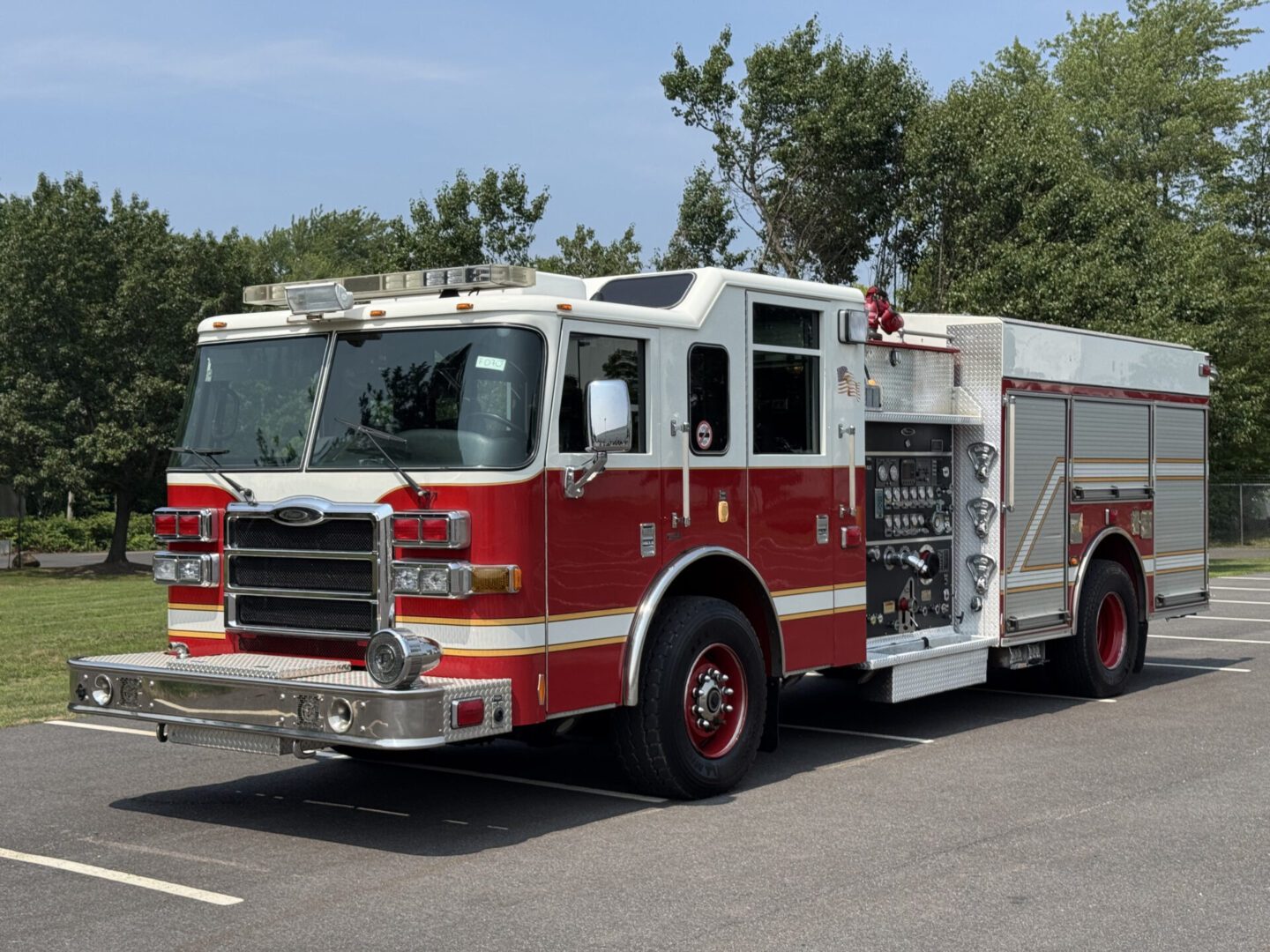
Fire trucks are red because of a habit that set in with the steam engine builders of the mid-1800s and never came loose. It wasn’t an engineering decision, and the research on visibility has pointed the other way for sixty years.
Red is the traditional color of American fire apparatus, standardized in the mid-1800s and carried forward by recognition rather than by any rule. No NFPA standard requires a fire truck to be a particular color. What the standard does require is retroreflective striping along the sides and a chevron pattern across the back.
Key Takeaways
- Red apparatus dates to the mid-1800s steam engines, where a bright finish contrasted against the large black boiler, and American hand engines before that were often green.
- The two most-repeated origin stories contradict each other, red as the cheapest paint and red as the priciest, and the pigment prices of the day support neither.
- Studies since about 1965 have found lime-yellow more conspicuous than red, while the 2009 USFA study credits red with better recognition — being seen and being understood are different problems.
- No NFPA standard regulates apparatus color, and a full cab-and-body color change on a used truck runs roughly $46,000 to $70,000 before graphics.
Why are fire trucks red?
Tradition, held in place by recognition. The color standardized in the mid-1800s, and by the time anyone thought to test whether it was the right choice, every driver in America already knew what a red truck with a siren meant.
Three stories get told about how it started. Two of them cancel each other out.
| The explanation | What it claims | What the record shows |
|---|---|---|
| The Model T story | Early cars were all black, so departments painted apparatus red to stand out | The Fire Fighters Association of Missouri lists this among the unverified oral myths. Model T production began in 1908, and red apparatus was already standard decades earlier |
| Red was the cheapest paint | Volunteer companies had no money, so they bought the bargain color | Vermillion pigment ran $0.50 to $1.25 a pound — mid-range for the period |
| Red was the most expensive paint | Companies spent up out of pride in their machine | Same pigment, same prices. Both versions can’t be true, and the figures support neither |
The explanation that does hold up is duller and more convincing. Steam fire engines of the mid-1800s were built around a large black boiler, and the manufacturers finished the rest of the machine in a bright contrasting color. Red did the job, the builders settled on it, and departments kept ordering it. Every truck in the used fire apparatus we currently have in stock is downstream of a paint choice made by a steam engine factory before anyone alive today was born.
When did fire engines first get painted red?
Red took over during the steam engine era of the mid-1800s. It wasn’t the first color on American apparatus — green was popular on hand engines up to roughly the 1850s.
Red entered the fire service through cloth before it reached paint. Protection Engine Company No. 5 of New York adopted a red flannel shirt as its uniform in 1840, and by 1865 New York’s Metropolitan Fire Department required chiefs to wear a red flannel double-breasted shirt. The color already carried meaning in the firehouse when the steam builders started spraying it on machines.
That timeline is also what sinks the Model T story. Red was settled fire service practice roughly half a century before Henry Ford built his first Model T. Whatever happened to American apparatus color, it happened long before the automobile showed up, and it happened across every type of fire apparatus that followed.
Shopping for apparatus in any color?
Browse Fire Truck Center’s current inventory — pumpers, aerials, tankers and brush trucks. Every unit inspected and priced.
Is red actually the most visible color for a fire truck?
No. Every study that has looked at the question since the 1960s has found something else more conspicuous, usually a lime-yellow.
The first work came out of the Lanchester College of Technology and the Coventry Fire Brigade in the UK around 1965, which found that under the street lighting of the day, yellow held its conspicuity better than red. Stephen Solomon, a New York optometrist, pushed lime-yellow in the United States from the mid-1970s on the strength of accident data. A 1984 look at nine departments across five cities put lime-yellow apparatus at 15.3 accidents per 100,000 runs against 31.9 for red. Solomon and systems safety engineer James King followed it in 1995 in the Journal of Safety Research, reporting crash-related incidents roughly three times higher for red or red-and-white apparatus.
The U.S. Fire Administration’s study of emergency vehicle visibility, published with IFSTA in August 2009 as report FA-323, reached the same place by a different route: fluorescent colors, especially yellow-green and orange, perform best in daylight, and retroreflective material is what carries conspicuity at night.
Those accident figures are 30 and 40 years old, and that matters. They were collected before modern retroreflective sheeting, before LED warning lights, and before rear chevrons were required on anything. The gap they measured isn’t the gap that exists today.
Does NFPA require a fire truck to be red?
No. No NFPA standard has ever told a department what color to paint a truck. The requirements are about retroreflective material, and they’re specific.
On the sides, retroreflective striping has to cover at least 50% of the cab and body length on each side, in a stripe or combination of stripes at least 4 inches wide in total. Across the front, at least 25% of the width. The side stripe doesn’t have to be a contrasting color — a white stripe on a white truck complies.
The back is the only place color enters the standard at all, and it has nothing to do with the paint. At least 50% of the rear-facing vertical surfaces must carry a chevron pattern sloping down and away from the centerline at 45 degrees, in 6-inch stripes. The material has to meet ASTM D4956 Type I sheeting. Under NFPA 1901 those stripes had to alternate red with yellow, fluorescent yellow or fluorescent yellow-green. NFPA 1900 dropped that in 2024 — the stripes now need only be two contrasting colors.

Those requirements were written as sections 15.9.3.1 through 15.9.3.3 of NFPA 1901, and the rear chevron arrived with the 2009 edition. The geometry carries forward into NFPA 1900, the standard for new apparatus contracted on or after 1 January 2024 — but the color rule did not. NFPA 1900 made the chevron colors optional, requiring only two contrasting retroreflective colors. NFPA 1900 doesn’t apply retroactively, so a used truck is never out of compliance with it — which standard governs which truck is worth getting straight before you read another listing.
Why are fire trucks still red if the research says otherwise?
Because being seen and being understood are two different problems, and the USFA study treats them as two different problems. Red loses on conspicuity and wins on recognition.
A lime-yellow truck is easier to pick out of a dark background. A red truck is instantly identifiable as a fire truck by every driver in the country, the same way a yellow bus is instantly a school bus. The 2009 study put weight on that second thing — a driver who sees a vehicle but doesn’t recognize what it is still does the wrong thing with it.
Departments that made the switch found this out directly. Pinellas Park, Florida ordered its first lime-yellow truck in 1972 and moved its fleet over. When three new rescue units came up for order, the department polled its firefighters and more than 70% wanted red back. The chief credited better retroreflective material and better lighting for closing the visibility gap that drove the original decision.
That’s the honest answer to the whole debate. Striping and lighting did more for apparatus safety than repainting fleets ever did.
Does the color matter when you buy a used fire truck?
Barely, and almost never enough to change which truck you buy. Used apparatus comes in whatever the selling department ordered, and the condition of the paint tells you far more than the color of it.
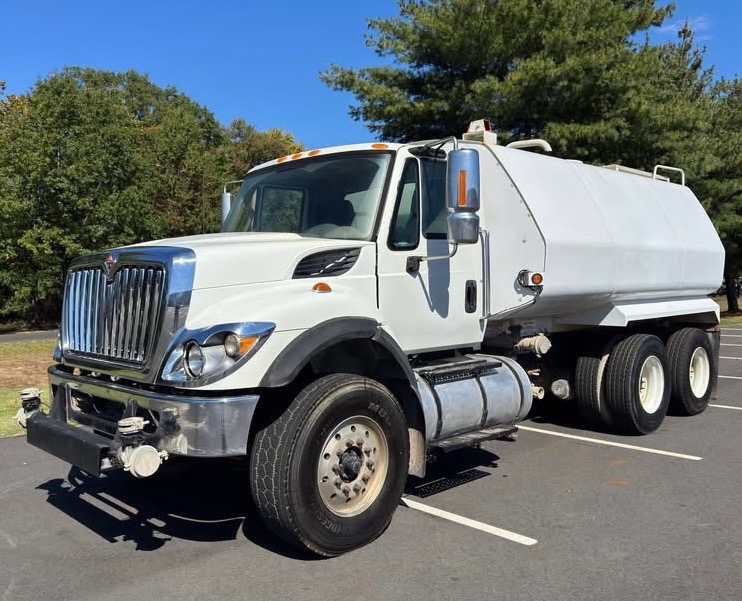
Three things are worth checking, and color is not one of them.
Corrosion is the most common reason to walk away from a used truck. A good-looking finish over a rotten compartment is worse than faded paint over sound metal.
Check that they are intact and legal for how you intend to run the truck. Retroreflective material degrades, and replacing it is far cheaper than paint.
This has to happen regardless of what color the truck is, and it is where the money goes.
SVI Refurb publishes a refurbishment price list, and refinishing a custom cab in one color runs $19,500 to $34,850 on it, with an 18-foot body and slam doors at $26,650 to $34,850 and a basic graphics package at $10,500 to $12,750. Cab and body together lands somewhere around $46,000 to $70,000 before graphics. That’s more than the gap between most pairs of comparable used trucks, which is the practical reason departments learn to live with the color they bought.
There is a cheaper route. When Geneva, Ohio wanted to change the look of a preowned ladder truck, it was quoted $25,000 to $30,000 to repaint with four to six weeks out of service, against roughly $7,500 to wrap it in vinyl with two to three weeks down. Those numbers are from April 2012 and are not current pricing, but the ratio and the downtime difference still hold, and a wrap is reversible in a way paint is not.
Our 150-point inspection looks hard at paint and corrosion as a condition question. It doesn’t care what color the truck is, and neither should your purchase decision. If the color genuinely matters for your department’s identity, price the refurbishment work into the deal up front rather than discovering it later, and read the used fire truck price guide before you decide what a repaint is worth to you.
Frequently Asked Questions
Why are fire trucks red and not yellow?
Tradition and recognition. Lime-yellow tests better for conspicuity, especially at night, and some departments run it for exactly that reason. Red stayed because American drivers recognize a red fire truck without thinking about it, and because modern retroreflective striping and LED lighting closed most of the visibility gap that favored yellow.
Are all fire trucks red?
No. Red is the most common color on American apparatus, but departments run white, yellow, lime-green, black and two-tone combinations, and nothing in any NFPA standard stops them. Large city departments tend to stay traditional; suburban and smaller departments are where most of the color variation shows up.
What is the “why are fire trucks red” joke?
It is a Victorian-era nonsense riddle built on the pun between “red” and “read” — newspapers are read, so fire trucks are red — strung through a chain of puns that doubles back on itself. Apple wrote a version of it into Siri as an Easter egg, which is why the joke still outranks most serious answers to the question.
Does a fire truck have to have reflective chevrons on the back?
Yes, for apparatus built to the 2009 edition of NFPA 1901 or later, including anything built to NFPA 1900 today. At least 50% of the rear-facing vertical surfaces must carry a 45-degree chevron pattern in 6-inch stripes. NFPA 1901 required those stripes to alternate red with yellow or yellow-green; NFPA 1900 made the colors optional in 2024, requiring only two contrasting colors. Trucks built before the 2009 edition were not required to have chevrons at all and are not retroactively out of compliance.
Can you repaint a used fire truck a different color?
Yes, and it’s expensive. Going by SVI Refurb’s published price list, refinishing a custom cab in one color runs $19,500 to $34,850, and a cab-and-body change lands roughly $46,000 to $70,000 before a graphics package. A vinyl wrap costs a fraction of that and comes off again, which is why departments changing identity rather than restoring paint often wrap instead.
What color were the first fire engines?
Often green. Green was a popular color on American hand engines up to roughly the 1850s. Red took over with the steam engine builders of the mid-1800s, who finished their machines in a bright color that contrasted with the large black boiler.
Talk to us about your next apparatus
Fire Truck Center has been selling quality-tested used fire apparatus since 2015. Every unit we list goes through a 150-point inspection, and every unit comes with a 30-day satisfaction guarantee. We ship nationwide, and we’ll tell you when a truck is wrong for you.
If you are weighing two used trucks and wondering whether the color should break the tie, call us at (215) 559-9119 or email help@firetruck.center. It shouldn’t break the tie, and we’ll walk you through what should.
Sources
- U.S. Fire Administration and IFSTA — Emergency Vehicle Visibility and Conspicuity Study, FA-323 (August 2009)
- Fire Fighters Association of Missouri — The Color Red in the American Fire Service
- FireRescue1 — Why are fire trucks red? (updated 2 September 2025)
- FireRescue1 — 70s throwback: Lime-yellow fire trucks fade out
- Cole Brothers — Chevrons and Reflective Striping for Fire Trucks, NFPA 1901
- FAMA — Buyer’s Guide: Retroreflective Striping and Chevron, TC043
- SVI Refurb — Refurb Fire Truck Price List
- Fire Apparatus & Emergency Equipment — Fire Department Transforms Ladder Truck with Vinyl Wrap (25 April 2012)
- NFPA — NFPA 1900, Standard for Aircraft Rescue and Firefighting Vehicles, Automotive Fire Apparatus, Wildland Fire Apparatus, and Automotive Ambulances
- Wikipedia — Fire engine red

 CALL US NOW